
Lip Filler Guide: What to Expect Before, During, and After Treatment

What Are Lip Fillers?
Lip filler is one of the most popular aesthetic treatments available today. Modern lip filler treatments offer a non-surgical way to enhance lip shape, improve symmetry, smooth fine lines, and create natural-looking volume.
Whether you're interested in subtle lip hydration or fuller lips, understanding the lip filler procedure can help you feel confident and informed before treatment.
Key Takeaways
Lip fillers can enhance volume, shape, symmetry, and hydration while maintaining natural-looking results when treatment is tailored to your facial features.
Swelling and bruising are common after treatment, with most filler settling within the first week and final results typically visible around two weeks.
Most hyaluronic acid lip fillers last about 6–12 months, although longevity varies based on the product, metabolism, lifestyle, and amount used
How Lip Fillers Work
Most lip filler treatments use hyaluronic acid fillers, a gel-like substance made from hyaluronic acid, which naturally occurs in the body. Hyaluronic acid attracts and retains water, helping create hydration, structure, and volume within the lips.
Lip filler injections are strategically placed to enhance the natural lip shape while maintaining facial harmony. Depending on your goals, filler may be used to add volume, define the border of the lips, improve symmetry, or soften vertical lip lines around the mouth.
Common Types of Lip Fillers
There are several FDA-approved lip fillers available today. Popular options include products from both the Juvéderm and Restylane families. Each filler has unique characteristics that make it better suited for certain lip shapes and treatment goals.
During your consultation, your provider will discuss which filler may be most appropriate based on your anatomy, desired outcome, and overall treatment plan.
Why People Get Lip Fillers
There are many reasons patients choose lip augmentation, and not all are focused on creating larger lips:
Adding volume and fullness
Improving lip symmetry
Enhancing definition and shape
Adding Volume and Fullness
One of the most common reasons for lip filler treatment is increasing volume. Some individuals naturally have thinner lips, while others notice a gradual decrease in lip fullness over time.
Lip filler can create subtle enhancement or more noticeable volume depending on the patient's goals.
Improving Lip Symmetry
Most people naturally have some degree of asymmetry. Lip filler injections can help create better balance between the upper lip and lower lip while preserving a natural appearance.
Enhancing Definition and Shape
Lip filler can improve the shape and contour of the lips by defining the cupid's bow, enhancing borders, and refining the overall lip shape.
For many patients, this added definition creates a more youthful and polished appearance without dramatically increasing size.

Restoring Volume Lost with Age
As we age, collagen production decreases and lips naturally lose volume and definition. Hyaluronic acid fillers can help restore lost support while softening lip lines and maintaining a youthful appearance.
How to Prepare for a Lip Filler Appointment
Preparing properly for your lip filler appointment can help minimize swelling and bruising and improve your overall experience.
What to Avoid Before Treatment
To reduce the likelihood of swelling and bruising, many providers recommend avoiding:
Alcohol for 24 hours
Fish oil supplements
Aspirin (if medically appropriate)
Ibuprofen (if medically appropriate)
Certain herbal supplements
Always discuss medications and supplements with your provider before treatment.
Scheduling Around Important Events
Lip fillers are best scheduled at least two weeks before weddings, vacations, professional photos, or other important events.
Although recovery is usually straightforward, swelling and bruising can temporarily affect appearance.
Setting Realistic Expectations
One of the most important aspects of any lip filler procedure is understanding what can realistically be achieved.
Your provider should discuss:
Your anatomy
Treatment goals
Expected outcomes
Potential limitations
The best lip filler results enhance your natural features rather than dramatically changing them.
What Happens During a Lip Filler Appointment?
Consultation and Facial Assessment
Every treatment should begin with a comprehensive consultation.
Your provider will evaluate:
Facial anatomy
Lip proportions
Existing asymmetries
Overall facial features
This assessment helps create a treatment plan that supports balance and harmony throughout the face.
Numbing and Injection Process
Most modern lip fillers contain lidocaine to improve comfort during treatment.
Many providers also use:
Topical numbing cream
Ice
Vibration devices
Lip injections are performed strategically using small amounts of filler to create controlled, natural-looking enhancement.
How Long Lip Filler Takes
Most lip filler appointments take approximately 30 to 60 minutes.
The actual injection process often takes less than 20 minutes, while consultation, photography, and treatment planning make up the remainder of the appointment.
Does Lip Filler Hurt?
A common concern among first-time patients is whether lip fillers hurt.
While the lips are a sensitive area, most patients describe the treatment as very tolerable. You may feel pressure, pinching, or brief discomfort during injections.
Modern techniques, numbing agents, and fillers containing lidocaine have significantly improved patient comfort during treatment.
What to Expect Immediately After Lip Fillers
Swelling and Bruising
Swelling and bruising are the most common side effects following lip filler treatment.
Many patients experience:
Mild swelling
Tenderness
Redness
Small bruises
Swelling is often most noticeable during the first 24 to 72 hours.
When Results Start to Settle
Initial results are visible immediately after treatment, but the final outcome takes time.
Most lip fillers begin settling within the first week, with final results typically visible around two weeks after treatment.
Common Side Effects
Temporary side effects may include:
Swelling and bruising
Tenderness
Firmness
Mild asymmetry
Small bumps
These effects usually improve as healing progresses.
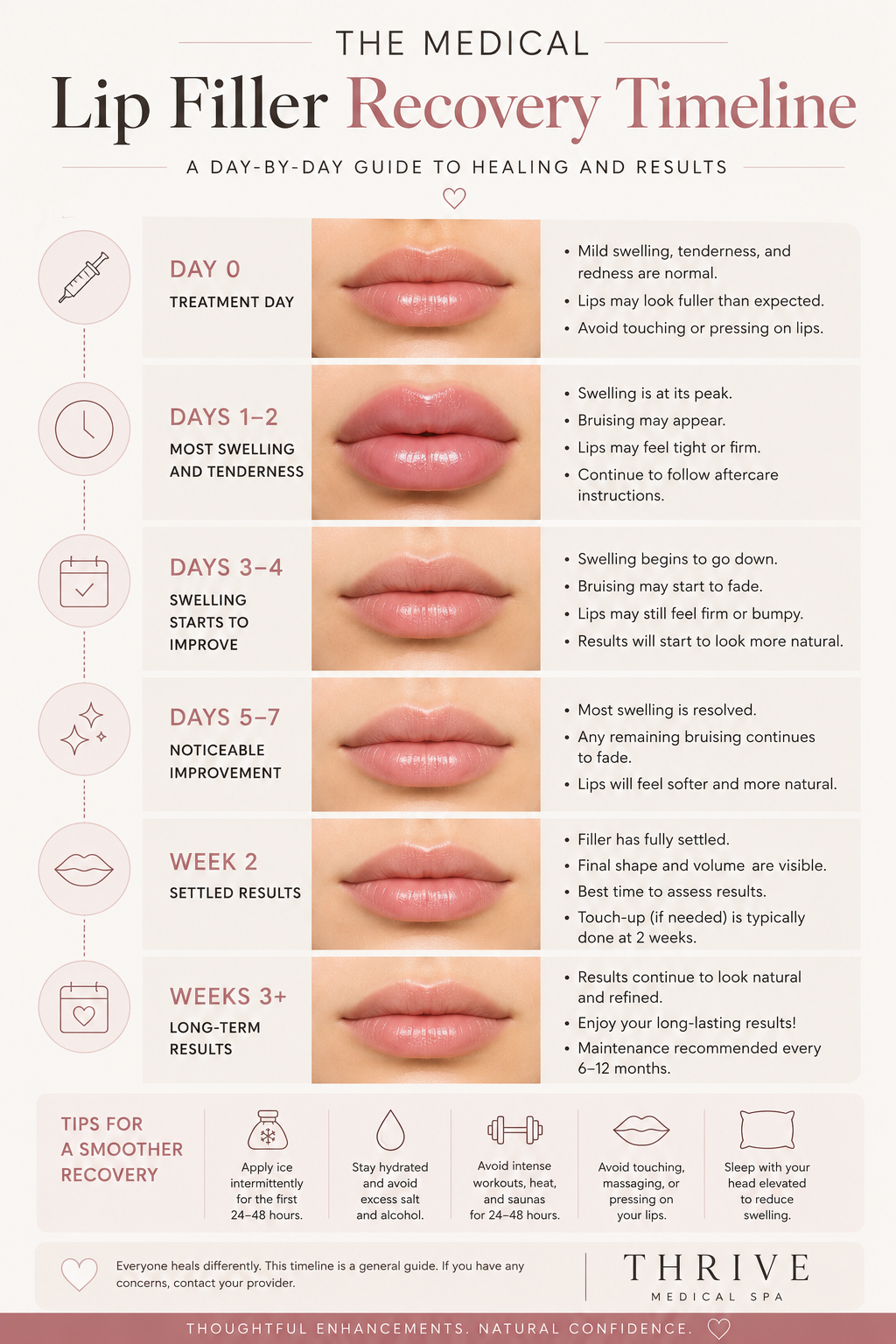
Lip Filler Aftercare Tips
What to Avoid After Treatment
Following your provider's instructions can help optimize healing.
Patients are commonly advised to avoid:
Intense exercise for 24 hours
Excessive heat exposure
Alcohol
Facial massages
Excessive pressure on the lips
Tips to Reduce Swelling
Helpful strategies include:
Applying ice packs intermittently
Staying hydrated
Sleeping with your head elevated
Avoiding excessive salt intake
Most swelling improves significantly within several days.
When to Contact Your Provider
While complications are uncommon, contact your provider immediately if you experience:
Severe pain
Significant discoloration
Blistering
Worsening swelling
Unusual symptoms
Prompt evaluation helps ensure optimal outcomes and patient safety.
How Long Do Lip Fillers Last?
The longevity of lip filler varies based on:
Product selection
Individual metabolism
Lifestyle
Amount of filler used
Most hyaluronic acid fillers in the lips last approximately 6 to 12 months.
Some patients may notice results lasting longer, while others metabolize filler more quickly.
How to Get Natural Looking Lip Filler Results
Start Conservatively
One of the most common mistakes patients make is trying to achieve too much volume too quickly.
Starting conservatively allows gradual enhancement while maintaining a natural appearance.
Choose an Experienced Injector
The injector matters more than the filler itself.
A skilled provider understands:
Facial anatomy
Lip proportions
Product selection
Advanced injection techniques
Choosing an experienced injector significantly improves both safety and outcomes.
Focus on Balance and Facial Harmony
Beautiful lips should complement the rest of the face.
Rather than focusing solely on size, experienced injectors prioritize:
Balance
Proportion
Symmetry
Natural lip shape
The goal is enhancement that feels authentic to you.
Common Lip Filler Mistakes to Avoid
Some common mistakes include:
Choosing filler based solely on price
Overfilling too quickly
Ignoring facial proportions
Chasing social media trends
Failing to follow aftercare instructions
The most successful lip augmentation treatments prioritize long-term balance over short-term volume.
Are Lip Fillers Reversible?
One of the advantages of hyaluronic acid fillers is that they are reversible.
An enzyme called hyaluronidase can dissolve filler when medically necessary or if a patient wishes to reverse their results.
This provides an added layer of flexibility and reassurance for patients considering treatment.
Final Thoughts
Lip filler can be an excellent option for patients seeking subtle enhancement, improved symmetry, smoother lip lines, or restored volume. Modern lip fillers offer customizable treatment options that can be tailored to each individual's anatomy and goals.
The best results come from careful planning, realistic expectations, and a provider who prioritizes facial harmony and natural-looking outcomes. Whether you're interested in lip hydration, lip augmentation, or addressing age-related volume loss, a consultation can help determine the best approach for your unique features.
Looking for Personalized Filler Advice? Schedule Your Cincinnati Consultation Today
If you're considering lip filler in Cincinnati and want personalized guidance, our team would love to help. During your consultation, we'll evaluate your anatomy, discuss your goals, and develop a customized treatment plan designed to enhance your natural beauty while maintaining balance and proportion.
About Thrive Medical Spa
Thrive Medical Spa is a premier aesthetic and wellness destination located in Cincinnati, Ohio. We specialize in natural-looking injectable treatments, facial balancing, medical-grade skincare, collagen stimulation, and personalized aesthetic plans. Our philosophy is simple: refined results, thoughtful care, and confidence that looks completely natural.
Frequently Asked Questions (FAQs)
What should I expect after lip filler treatment?
After lip filler treatment, it is normal to experience swelling and bruising, tenderness, and mild firmness. Most side effects improve significantly within the first week, with final results typically visible around two weeks.
How much lip filler do first-time patients usually get?
Most first-time lip filler patients start with one syringe or less depending on their anatomy and goals. Starting conservatively often creates the most natural appearance and allows for gradual enhancement over time.
Will my lips look natural after filler?
Yes, lip fillers can look very natural when performed by an experienced injector. The key is choosing a treatment plan that enhances your natural lip shape while maintaining facial harmony.
How long does it take for lip filler to settle?
Most lip filler begins settling within the first week after treatment. Final results are typically seen around two weeks once swelling has resolved.
How do I choose the right lip filler injector?
Choosing the right injector involves reviewing before-and-after photos, researching qualifications, and scheduling a consultation. Experience, aesthetic philosophy, and understanding of facial anatomy are all important factors.
What is the difference between lip hydration and lip volume filler?
Lip hydration treatments focus on improving moisture, smoothness, and subtle plumpness within the lips. Volume-focused treatments use hyaluronic acid fillers to create more noticeable fullness, shape, and structure.