
How Long Do Dermal Fillers Last? Timeline, Areas, and What Affects Results

One of the most common questions clients ask before starting dermal fillers is simple: how long do dermal fillers last? The answer, while straightforward at first glance, is actually influenced by several factors, including the treatment area, your body’s metabolism, and the specific type of filler used.
When it comes to hyaluronic acid fillers, results are designed to be temporary yet long-lasting, giving you flexibility while still maintaining a natural, refreshed appearance. Understanding dermal filler longevity helps you plan treatments more effectively and set realistic expectations for your results.
How Long Do Dermal Fillers Last on Average?
Typical Duration Range
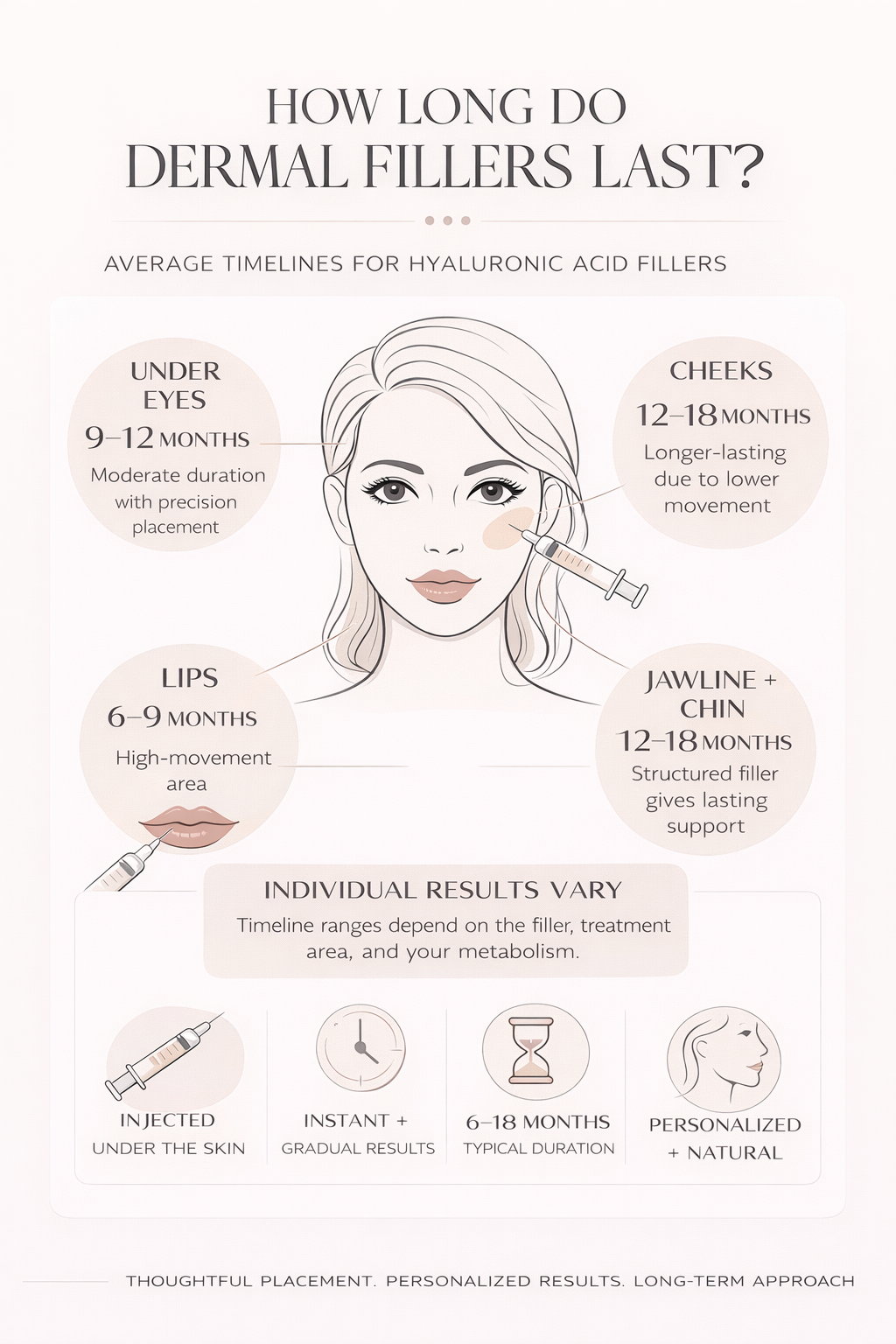
On average, hyaluronic acid fillers last anywhere from 6 to 18 months. This range reflects how versatile these injectable treatments are; some are softer and designed for subtle movement, while others are more structured to support deeper areas of the face.
For many clients, results begin to soften gradually around the 6–9 month mark, with some areas maintaining volume closer to 12–18 months.
Why There’s No One-Size-Fits-All Answer
There is no single answer to how long fillers last because every face and every lifestyle is different. Factors such as metabolism, activity level, and even how expressive you are can all influence filler longevity.
This is why a personalized filler treatment plan is essential. At Thrive, we approach every treatment with a long-term perspective, focusing on consistency and balance rather than overcorrection.
Dermal Filler Longevity by Treatment Area
Different areas of the face experience different levels of movement and structural support, which directly impacts how long dermal fillers last.
Lips (Shorter Duration)
Lip fillers tend to have a shorter lifespan, typically lasting 6–9 months.
This is because:
The lips are a high-movement area
Talking, eating, and expression increase breakdown
The tissue is softer and more dynamic
While longevity is shorter, this also allows for flexibility in maintaining natural, balanced results.
Cheeks (Longer Duration)
The cheeks are one of the longest-lasting areas for hyaluronic acid fillers, often maintaining results for 12–18 months.
This is due to:
Less movement compared to the lips
Deeper placement along the bone
Use of more structured HA fillers
Cheek filler is often used to restore facial volume and subtly lift the midface, helping to enhance facial contours.
Under Eyes (Moderate Duration)
Under-eye filler typically lasts around 9–12 months, depending on the product and placement.
This area requires:
Precision placement
Softer, more refined HA fillers
A conservative approach
Because the under-eye area is delicate, results are designed to blend seamlessly rather than create dramatic volume.
Jawline and Chin
Fillers placed in the jawline and chin can last 12–18 months or longer, especially when using more structured HA fillers.
These areas:
Experience less movement
Benefit from deeper placement
Provide long-lasting support for facial contours
Jawline and chin fillers are often used to create definition and improve overall facial balance.
How Long Different Types of Dermal Fillers Last
Hyaluronic Acid Fillers
Since this guide focuses on hyaluronic acid, it’s important to understand that not all HA fillers are the same.
Different formulations are designed for:
Soft movement (lips, fine lines)
Structural support (cheeks, jawline)
This is why some hyaluronic acid fillers last closer to 6 months, while others can last well over a year. The versatility of HA is what makes it the most popular choice for dermal filler injections.
Why Dermal Fillers Don’t Last Forever
Your Body Naturally Breaks Them Down
One of the reasons dermal fillers last temporarily is because the body naturally metabolizes hyaluronic acid. Since it is a naturally occurring substance, your body recognizes it and gradually breaks it down over time.
This process is what makes HA fillers both safe and adaptable.
Movement Speeds Up Breakdown
Areas with more movement tend to break down filler faster.
For example:
Lips → high movement → shorter longevity
Cheeks → lower movement → longer longevity
This is a key factor in understanding how long dermal fillers will last in different areas of the face.
What Affects How Long Dermal Fillers Last
Type of Filler Used
Not all hyaluronic acid fillers are created equally. Thicker, more cross-linked fillers tend to last longer than softer, more flexible ones. The right product is chosen based on your goals and the area being treated.
Treatment Area
As discussed, the treatment area plays a major role in dermal filler longevity. High movement areas break down filler faster, while structural areas hold onto it longer.
Your Metabolism
Your body’s metabolism significantly impacts how long dermal fillers last.
Faster metabolism → quicker breakdown
Slower metabolism → longer-lasting results
This is why two people receiving the same treatment may experience different timelines.
Lifestyle Factors
Certain lifestyle habits can influence how long fillers last:
High-intensity exercise
Sun exposure
Stress levels
Hydration and skincare
Supporting your skin with good habits can help extend filler longevity.
Injection Technique
The skill and technique of your provider play a critical role. Strategic placement ensures:
Better integration with tissue
More natural results
Longer-lasting outcomes
At Thrive, our approach to dermal filler injections is rooted in precision and an in-depth understanding of facial contours.
What to Expect as Dermal Fillers Wear Off
Gradual Fading
One of the benefits of hyaluronic acid fillers is that they fade gradually. You won’t wake up one day and feel like your results have disappeared, but instead the volume slowly softens over time.
Subtle Changes Fast
While the fading is gradual, you may notice subtle changes:
Slight decrease in fullness
Soft return of lines like nasolabial folds
Less definition in treated areas
This is why maintenance treatments are often recommended to preserve results.
Ready to See How Fillers Work for You? Contact Thrive for Your Consultation
Understanding how long dermal fillers last allows you to approach treatment with clarity and confidence. Whether your goal is to restore facial volume, smooth lines, or refine your features, a personalized plan is key.
If you're considering dermal filler treatments in Cincinnati, a consultation can help determine the right approach for your unique goals. At Thrive Med Spa, we focus on natural, long-term results, helping you maintain balance and confidence over time.
About Thrive Medical Spa
As a trusted Cincinnati med spa, Thrive Med Spa offers elevated, personalized injectable treatments designed to enhance your natural features. Our approach to hyaluronic acid fillers is rooted in precision, education, and artistry, ensuring results that feel effortless and refined.
We believe in creating results that evolve with you, not against you.
Frequently Asked Questions (FAQs)
How long do dermal fillers last?
Dermal fillers typically last between 6 and 18 months, depending on the treatment area, type of filler, and individual factors. Hyaluronic acid fillers are designed to gradually break down over time, allowing for natural-looking results.
How long do dermal fillers last in different areas of the face?
The longevity of dermal fillers varies by area. For example, lip fillers may last 6–9 months, while cheek or jawline fillers can last 12–18 months due to less movement and deeper placement.
What is the longest-lasting type of dermal filler?
Within hyaluronic acid fillers, more structured formulas used in areas like the cheeks or jawline tend to last the longest. These fillers are designed to support facial contours and maintain volume over time.
Why do dermal fillers fade faster in some people?
Dermal fillers may fade faster in individuals with higher metabolism, more active lifestyles, or frequent facial movement. These factors can increase how quickly the body breaks down the filler.
How often do you need to get dermal fillers?
Most clients maintain results with treatments every 6–12 months, depending on the area and desired outcome. Regular maintenance helps preserve facial volume and ensures consistent, natural-looking results.