
What Are Dermal Fillers? A Beginner’s Guide to Types, Uses, and Results

Dermal fillers have become one of the most popular non-surgical aesthetic treatments for restoring volume, softening facial wrinkles, and enhancing natural features. As the demand for natural, refined results continues to grow, more individuals are turning to injectable dermal fillers as a way to support facial harmony without surgery.
Whether you’re new to aesthetic treatments or simply looking to better understand your options, the experienced team at Thrive Med Spa will walk you through everything you need to know about dermal fillers, from the types available to what results you can realistically expect.
Key Takeaways
Dermal fillers are a versatile, non-surgical treatment used to restore volume, smooth wrinkles, and enhance natural facial features.
Hyaluronic acid fillers are the most common option, offering immediate, natural-looking results with the flexibility to adjust or reverse if needed.
The best results come from a personalized, anatomy-driven approach that focuses on balance, subtle enhancement, and long-term skin health.
What Are Dermal Fillers?
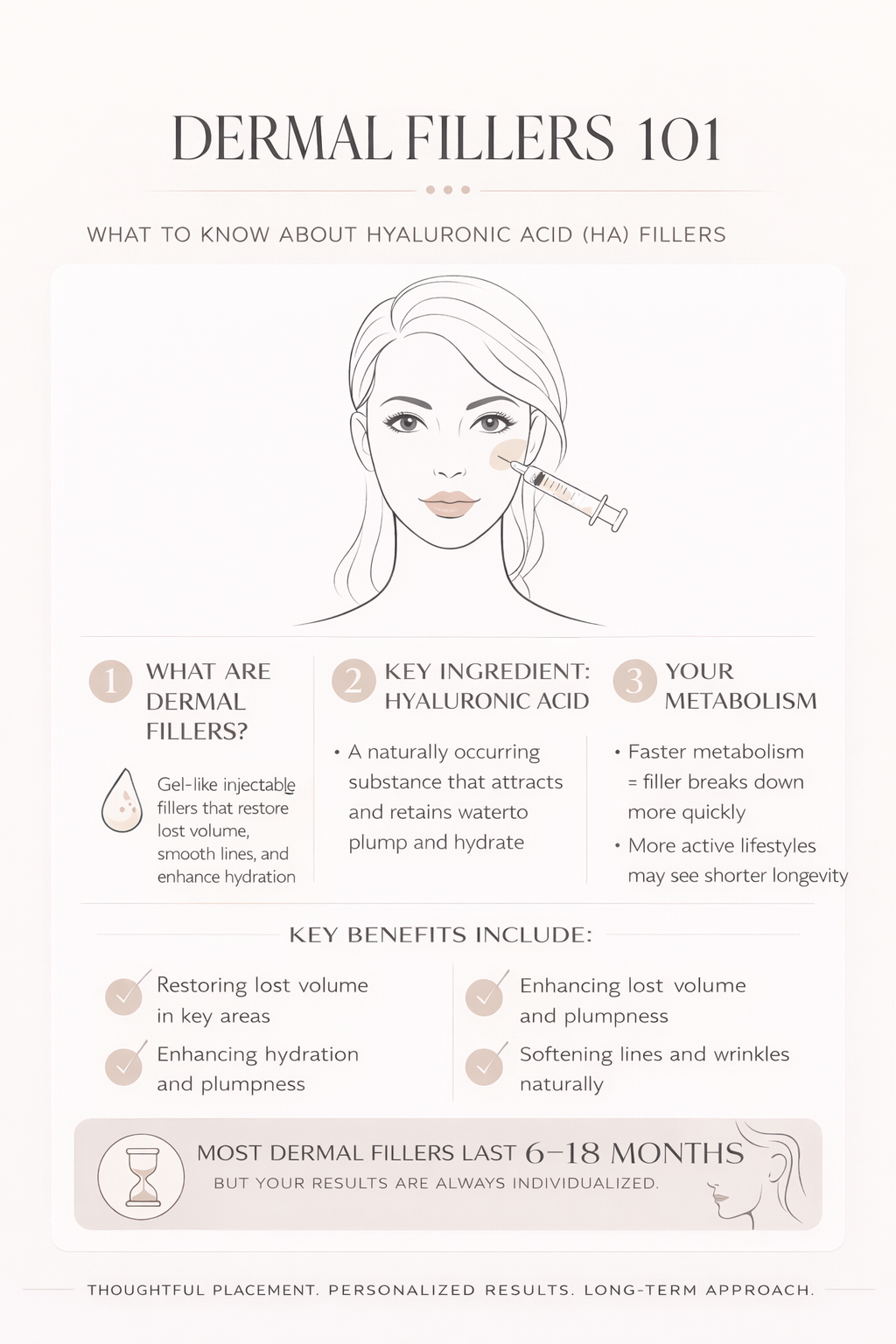
Dermal fillers are soft tissue fillers made from gel-like substances that are carefully injected beneath the skin to restore volume, smooth lines, and enhance facial contours. These injectable fillers are commonly used to address signs of aging such as smile lines, nasolabial folds, and facial wrinkles, as well as to subtly enhance areas like the lips, cheeks, and jawline.
Most dermal filler treatments are minimally invasive and designed to work with your natural facial anatomy, helping you achieve balanced, natural-looking results.
How Dermal Fillers Differ from Other Cosmetic Treatments
Unlike treatments like Botox, which relax muscles to reduce dynamic wrinkles, dermal fillers physically add volume and structure. They are ideal for addressing volume loss, contouring the face, and improving skin support, rather than limiting movement.
Why People Choose Dermal Fillers
Dermal fillers are chosen for their versatility, immediate results, and ability to create subtle yet impactful changes.
Common Goals of Dermal Filler Treatments
Dermal fillers can be used to address a variety of concerns depending on your goals and facial anatomy. Some of the most common treatment goals include:
Restore lost volume in the cheeks or midface
Smooth nasolabial folds and smile lines
Enhance lip shape and hydration
Improve facial symmetry and balance
Soften the appearance of acne scars
Create a subtle contour in the jawline or chin
At Thrive Med Spa, the focus is always on enhancement, not transformation, using dermal fillers to support your natural features.

Types of Dermal Fillers
Not all dermal fillers are the same. Different types are formulated to provide varying levels of structure, hydration, and longevity depending on how and where they are used.
Hyaluronic Acid (HA) Fillers
Hyaluronic acid fillers are the most widely used injectable dermal fillers and are often considered the gold standard for natural, refined results. Hyaluronic acid is a substance naturally found in the skin that binds to water, helping maintain hydration, volume, and overall skin structure. As we age, our natural levels of hyaluronic acid decline, contributing to volume loss, fine lines, and a decrease in skin elasticity.
Hyaluronic acid fillers are designed to replenish what the body gradually loses over time. These gel-like substances integrate seamlessly into the skin, attracting and retaining moisture to create a soft, hydrated, and subtly plumped appearance. Because of their versatility, HA fillers can be used across multiple areas of the face and tailored to different textures, from very soft products for delicate areas to more structured options for contouring and support.
One of the key advantages of HA fillers is their immediate yet adjustable results. After a dermal filler procedure, you will typically see an instant improvement in volume and smoothness, with final results refining over the following one to two weeks as the product settles and integrates with the surrounding tissue.
These fillers are especially effective for:
Softening nasolabial folds and smile lines
Enhancing lip shape, hydration, and subtle volume
Restoring fullness to the cheeks and midface
Improving under-eye hollowness
Refining fine lines and early facial wrinkles
Key Benefits of Hyaluronic Acid Fillers
Another important benefit is that hyaluronic acid fillers are reversible. If needed, an enzyme called hyaluronidase can be used to safely dissolve the filler, offering an added layer of flexibility and safety that many clients find reassuring, especially when trying filler treatments for the first time.
In addition to creating volume, HA fillers also improve overall skin quality by increasing hydration within the treated area. This contributes to a smoother, more radiant appearance beyond just structural enhancement. When placed thoughtfully, they can help restore balance to the face while maintaining natural movement and expression.
Results from hyaluronic acid fillers typically last between 6 and 18 months, depending on the specific product used, the treatment area, and individual factors such as metabolism and lifestyle. Over time, the body gradually breaks down the filler, allowing for maintenance treatments that can be adjusted as your goals evolve.
At Thrive Med Spa, HA fillers are used with a precision-based, anatomy-driven approach. Rather than simply adding volume, the focus is on enhancing natural features, supporting facial structure, and creating results that feel subtle, balanced, and effortlessly you.
What Areas Can Dermal Fillers Treat?
Dermal fillers can be used across a wide range of areas to restore volume, enhance contours, and support overall facial balance. Treatment areas vary depending on your goals and natural anatomy.
Popular Treatment Areas
Lips
Cheeks
Under eyes
Jawline
Chin
Nasolabial folds and smile lines
Less Common but Growing Uses
While most treatments focus on common facial areas, dermal fillers are also increasingly used in more specialized or less traditional areas.
Temple hollowing
Neck lines
Hand rejuvenation
Improving the appearance of acne scars
What Results Can You Expect from Dermal Fillers?
Immediate vs. Gradual Results
Some fillers, like hyaluronic acid fillers, provide immediate results, while others, like poly l lactic acid, build gradually over weeks to months.
How Long Do Dermal Fillers Last?
Results vary depending on the types of dermal fillers used:
HA fillers: 6–18 months
Natural Looking Results: What That Really Means
Natural results mean:
Preserving your unique facial anatomy
Avoiding overfilling
Creating balance, not exaggeration
At Thrive, dermal fillers are used to restore, refine, and support—not change.
What to Expect During a Dermal Filler Appointment
If you’re new to dermal fillers, it’s helpful to understand how the process works from start to finish. From your initial consultation to post-treatment recovery, each step is designed to support safe, natural-looking results.
Before Your Appointment
Consultation to assess goals and facial anatomy
Discussion of treatment plan and expectations
During the Procedure
Filler injections are performed using a fine needle or cannula
Most treatments take 30–60 minutes
Numbing agents are often used for comfort
Aftercare and Recovery
Mild swelling or bruising may occur
Most clients return to normal activities the same day
Results continue to settle over 1–2 weeks
Are Dermal Fillers Safe?
Dermal fillers are FDA-approved when performed by a qualified provider.
Common Side Effects
Swelling
Bruising
Tenderness
Rare but Serious Risks
Vascular occlusion
Infection
Asymmetry
These risks are minimized when you choose an experienced provider.
Who Is a Good Candidate?
You may be a good candidate if you:
Want to address volume loss or facial wrinkles
Are looking for non-surgical enhancement
Have realistic expectations
Dermal Fillers vs. Botox: What’s the Difference?
When Fillers Are the Better Option
Volume loss
Deep lines like nasolabial folds
Contouring
When Botox May Be Better
Dynamic wrinkles (forehead, crow’s feet)
Preventative treatments
How Much Do Dermal Fillers Cost?
The cost of dermal filler treatments varies depending on:
Type of filler used
Number of syringes
Treatment area
A personalized consultation is the best way to determine cost.
Choosing the Right Provider for Dermal Fillers
What to Look For
Medical credentials and training
Experience with facial anatomy
Natural-looking results
Questions to Ask Before Treatment
What type of filler do you recommend?
How many syringes will I need?
What results can I expect?
Are Dermal Fillers Right for You?
Dermal fillers are a highly customizable option for those seeking subtle, natural enhancement. The key is a thoughtful, individualized approach that aligns with your goals and long-term skin health.
Want to Learn More? Follow Thrive or Schedule Your Consultation Today
Whether you’re new to dermal fillers or exploring ways to refine your results, a personalized approach makes all the difference. At Thrive Med Spa, our Cincinnati dermal fillers treatment is designed to enhance your natural features with precision, balance, and a focus on long-term results.
About Thrive Medical Spa
At Thrive Medical Spa, we specialize in intentional, natural aesthetic care. Our approach focuses on precision, balance, and long-term results, helping you feel confident in a way that feels effortless and true to you. Located in the charming village of Mariemont, we proudly serve clients throughout Greater Cincinnati with personalized, results-driven treatments.
Frequently Asked Questions (FAQs)
What are dermal fillers made of?
Dermal fillers are typically made from substances of hyaluronic acid. These gel-like substances are designed to mimic or stimulate natural components in the body.
Do dermal fillers hurt?
Most dermal filler procedures are well tolerated, especially with numbing agents. You may feel slight pressure or a pinch during filler injections, but discomfort is typically minimal.
Are dermal fillers reversible?
Yes, hyaluronic acid fillers are reversible using an enzyme called hyaluronidase. This allows for adjustments if needed.
What areas can dermal fillers treat?
Dermal fillers can treat areas such as lips, cheeks, under eyes, jawline, and nasolabial folds. They are also used for improving acne scars and facial wrinkles.
Who is a good candidate for dermal fillers?
A good candidate is someone looking to restore volume, enhance features, or soften wrinkles without surgery. A consultation helps determine the best treatment plan.
How long does a dermal filler appointment take?
Most dermal filler treatments take about 30–60 minutes. The exact time depends on the areas being treated and the complexity of the plan.
How do I choose the right provider for dermal fillers?
Choosing a provider with strong knowledge of facial anatomy, experience, and a natural aesthetic is essential. Always look for a medically trained professional who prioritizes safety and balance.