
How Do Dermal Fillers Work? A Simple Guide to Volume, Hydration, and Results

Dermal fillers have become one of the most sought-after aesthetic treatments for restoring volume, enhancing hydration, and creating a more youthful appearance, without surgery. Among the many options available, hyaluronic acid fillers are the most commonly used due to their safety, versatility, and ability to deliver natural-looking results.
If you’ve ever wondered how dermal fillers work beneath the skin, in this blog, the Thrive Med Spa team will walk you through the science in a simple, approachable way. From how they restore lost volume to how they attract hydration and support skin structure, understanding the mechanism behind injectable dermal fillers can help you feel confident in your treatment decisions.
Key Takeaways
Dermal fillers restore lost volume and facial support by strategically replacing volume that diminishes with age due to changes in fat, collagen, bone structure, and natural hyaluronic acid levels.
Hyaluronic acid fillers do more than add volume. They attract and retain moisture, helping the skin appear smoother, fuller, and more hydrated while enhancing overall skin quality.
Natural-looking results depend on precise placement and product selection. Skilled providers use fillers to enhance facial balance and structure, with results that can last anywhere from 6 to 18 months, depending on the treatment area, filler type, and individual factors.
What Happens When Dermal Fillers Are Injected?
During a dermal filler procedure, a provider carefully places small amounts of filler beneath the skin using precise dermal filler injections. These gel-like substances are designed to integrate seamlessly with your natural tissue, restoring volume and improving contour in targeted areas.
Because dermal fillers are gel-based, they act as both a volumizer and a hydrator, depending on the depth and placement of the product.
Where Fillers Sit in the Skin
The exact placement of injectable fillers depends on the treatment goal. Fillers can be placed:
Superficially to smooth fine lines
In the mid-dermis for hydration and texture
Deep along the bone to restore structure and support
This layered approach allows providers to address multiple concerns, including lost volume, nasolabial folds, and overall facial balance.
Why Placement Matters for Results
One of the most important aspects of a successful dermal filler treatment is placement. The face is made up of complex facial anatomy, and strategic placement ensures that results look natural rather than overdone.
Rather than simply adding volume, skilled providers inject dermal fillers in a way that enhances proportions, supports structure, and maintains natural movement.
How Dermal Fillers Restore Volume
What Causes Volume Loss in the First Place
As we age, several changes occur beneath the surface of the skin:
Decrease in fat pads
Loss of collagen and elastin
Bone resorption
Decline in natural hyaluronic acid levels
These changes lead to hollowing, sagging, and the formation of deeper folds like nasolabial folds.
How Fillers “Lift” and Smooth the Skin
When dermal fillers work, they restore volume in areas where support has been lost. By placing filler strategically, providers can:
Lift the midface
Smooth out facial wrinkles
Soften lines and folds
This is how dermal fillers plump the skin by physically supporting the tissue from beneath, creating a smoother surface appearance.

How Hyaluronic Acid Fillers Create Hydration and Plumpness
What Is Hyaluronic Acid?
Hyaluronic acid is a naturally occurring substance found in the skin, joints, and connective tissue. Its primary role is to retain moisture and keep tissues hydrated and supported.
As we age, our natural supply decreases, leading to dryness, fine lines, and loss of elasticity.
How Hyaluronic Acid Attracts Water
One of the most unique properties of hyaluronic acid fillers is their ability to bind water. In fact, hyaluronic acid can hold up to 1,000 times its weight in water.
Once injected, these gel-like substances attract and retain moisture in the surrounding tissue, enhancing both hydration and volume.
Why This Leads to a Smoother, Fuller Appearance
Because dermal fillers are gel-based and hydrophilic, they don’t just add volume, but they also improve skin quality.
This leads to:
Softer, smoother skin
Reduced appearance of smooth lines
A more radiant, hydrated look
The combination of volume and hydration is what gives patients that naturally refreshed, youthful appearance.
How Dermal Fillers Support Skin Structure
The “Scaffolding” Effect Explained
In addition to hydration, injectable dermal fillers provide structural support. Think of fillers as creating a subtle “scaffolding” beneath the skin.
This internal support helps:
Lift sagging tissue
Improve facial contour
Maintain overall balance
Immediate vs. Structural Results
With hyaluronic acid fillers, you’ll often see:
Immediate improvement in volume
Gradual refinement as the filler settles
While some products like poly l lactic acid are known for stimulating collagen over time, hyaluronic acid primarily provides instant structural support and hydration, with some secondary benefits to skin quality.
Do Dermal Fillers Stimulate Collagen?
Short-Term vs. Long-Term Effects
Hyaluronic acid fillers are not primarily designed to stimulate collagen production, but they can have indirect benefits.
Short-term:
Immediate volume and hydration
Long-term:
Improved skin environment may support healthier tissue
Which Fillers Promote Collagen Production
While this guide focuses on HA fillers, it’s worth noting that other types of injectable treatments, such as poly l lactic acid, are specifically designed to stimulate collagen production.
However, for those seeking immediate, natural results, hyaluronic acid fillers remain the most popular choice.
How Long Do Dermal Fillers Last
How the Body Gradually Breaks Down Fillers
Over time, the body naturally metabolizes dermal fillers. Because hyaluronic acid is already found in the body, it is gradually broken down and absorbed.
This process is what makes fillers temporary but also safe and adaptable.
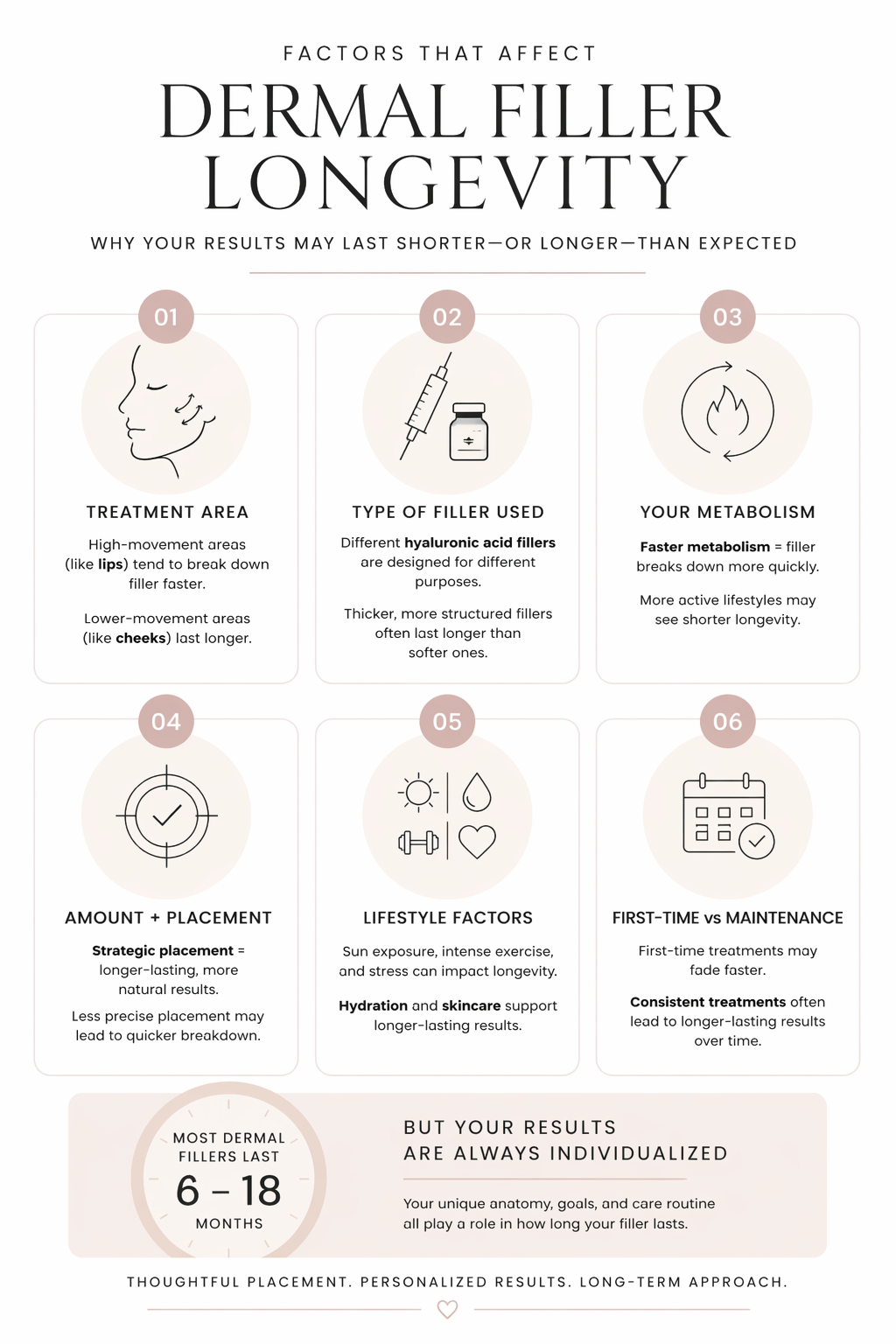
Factors That Affect Longevity
The longevity of dermal filler treatments depends on several factors:
Area treated
Type of filler used
Metabolism
Lifestyle factors (exercise, sun exposure, etc.)
Most hyaluronic acid fillers last between 6 to 18 months.
Schedule Your Dermal Fillers Consultation with Thrive Today
Understanding how dermal fillers work is the first step in achieving natural, refined results. Whether you’re looking to restore volume, enhance hydration, or smooth lines, a personalized approach is key.
At Thrive Med Spa, every dermal filler procedure is designed with intention, focusing on balance, precision, and long-term outcomes. If you’re considering dermal filler treatments in Cincinnati, a consultation can help determine the right products and treatment plan for your unique goals.
About Thrive Medical Spa
Located in Mariemont and serving clients all across Greater Cincinnati, Thrive Med Spa specializes in elevated, natural aesthetic care. Our approach to injectable dermal fillers is rooted in an in-depth understanding of facial anatomy, ensuring results that are subtle, balanced, and uniquely tailored to you. We believe in enhancing your natural features through thoughtful, personalized care.
Frequently Asked Questions (FAQs)
How do dermal fillers actually work under the skin?
Dermal fillers work by being injected beneath the skin as gel-like substances that restore volume and attract hydration. These fillers integrate with the surrounding tissue to support structure and improve overall skin appearance.
How do dermal fillers add volume to the face?
Dermal fillers add volume by physically filling areas of lost volume and providing support beneath the skin. This helps lift and contour the face while softening deeper lines like nasolabial folds.
Why do dermal fillers make skin look smoother?
Dermal fillers make skin look smoother because they both plump the skin and improve hydration. The combination of volume and moisture helps reduce the appearance of fine lines and creates a more even surface.
How do dermal fillers improve skin over time?
Dermal fillers improve skin over time by maintaining hydration and supporting the skin’s structure. While they don’t directly replace treatments like facial fat grafting or collagen stimulators, they help create an environment that supports healthier, more resilient skin.