
Dermal Filler Side Effects: What’s Normal, What’s Not, and When to Be Concerned

Dermal fillers are one of the most popular non-surgical cosmetic treatments for restoring volume, smoothing facial wrinkles, and enhancing natural features. While results are often beautiful and natural, it’s important to understand the potential side effects that can occur after a dermal filler procedure.
Most side effects are mild and temporary, especially when using hyaluronic acid fillers, which are among the safest and most widely used injectable fillers. However, knowing what’s normal and what’s not can help you feel confident, informed, and prepared for your treatment.
Key Takeaways
Most dermal filler side effects are mild and temporary. Swelling, redness, bruising, and tenderness are common after treatment and typically resolve within a few days to two weeks.
Knowing the warning signs can help protect your health. Severe pain, skin discoloration, signs of infection, or prolonged swelling should be evaluated by your provider as soon as possible.
Choosing an experienced injector is the best way to reduce risk. A qualified provider, proper injection techniques, and following pre- and post-treatment instructions all help ensure a safe treatment and natural-looking results.
Are Dermal Fillers Safe?
Overall Safety of Dermal Fillers
When performed by a qualified medical professional, dermal filler injections are considered a safe and effective medical procedure. Most modern fillers are FDA-approved fillers, particularly hyaluronic acid-based fillers, which are designed to be biocompatible with the body. Because hyaluronic acid is a naturally occurring substance, it is gradually broken down over time, making it both safe and reversible.
Why Provider Expertise Matters
The safety of facial fillers depends heavily on the skill of the provider. An experienced injector understands facial anatomy, proper technique, and how to avoid complications such as improper injection technique. Choosing a qualified provider, such as a trained nurse practitioner or physician, is one of the most important steps in reducing risk.
Common Dermal Filler Side Effects (What’s Normal)
Most side effects after filler injections are mild and resolve within a few days.
Swelling and Redness
Swelling and redness at the injection site are the most common reactions.
Typically appears immediately after treatment
Peaks within 24–48 hours
Gradually subsides over a few days
This is a normal response to the injection process and the body adjusting to the filler.
Bruising
Bruising can occur when small blood vessels are disrupted during dermal filler injections.
More common in areas like the lips
Usually resolves within 5–7 days
Can be minimized with proper pre-care
Tenderness or Mild Pain
Some clients experience slight tenderness or sensitivity after treatment.
Typically mild
Improves within a few days
More noticeable in high movement areas like lip fillers
Minor Lumps or Firmness
It’s not uncommon to feel small areas of firmness after hyaluronic acid fillers.
Often due to swelling or product settling
Usually resolves within 1–2 weeks
Can be gently massaged if advised by your provider
Less Common Side Effects
While less frequent, these side effects may still occur and should be monitored.
Prolonged Swelling or Bruising
If swelling or bruising lasts longer than expected:
It may indicate increased sensitivity
Could be influenced by lifestyle or medications
Most cases still resolve without intervention but should be evaluated if persistent.
Lumps or Nodules
Unlike minor firmness, true lumps or nodules:
May persist beyond a few weeks
Could require evaluation or treatment
With hyaluronic acid fillers, these can often be dissolved if needed.
Asymmetry
Mild asymmetry can occur as swelling resolves.
Often temporary
May require a small adjustment
Common during early healing
Allergic Reactions
Although rare, allergic reactions can occur.
Symptoms may include:
Itching
Significant swelling
Rash
These should be addressed promptly by your provider.
Rare but Serious Risks
Serious complications are rare but important to understand.
Vascular Occlusion
This occurs when filler is inadvertently injected into or compresses a blood vessel.
Symptoms may include:
Severe pain
Skin discoloration
Blanching
This is a medical emergency and requires immediate treatment.
Skin Necrosis
If blood flow is compromised, tissue damage can occur.
Early intervention is critical to prevent long-term effects.
Vision Changes or Blindness (Extremely Rare)
In extremely rare cases, filler may affect blood flow to the eye.
This risk is minimized by choosing highly trained providers with advanced anatomical knowledge.
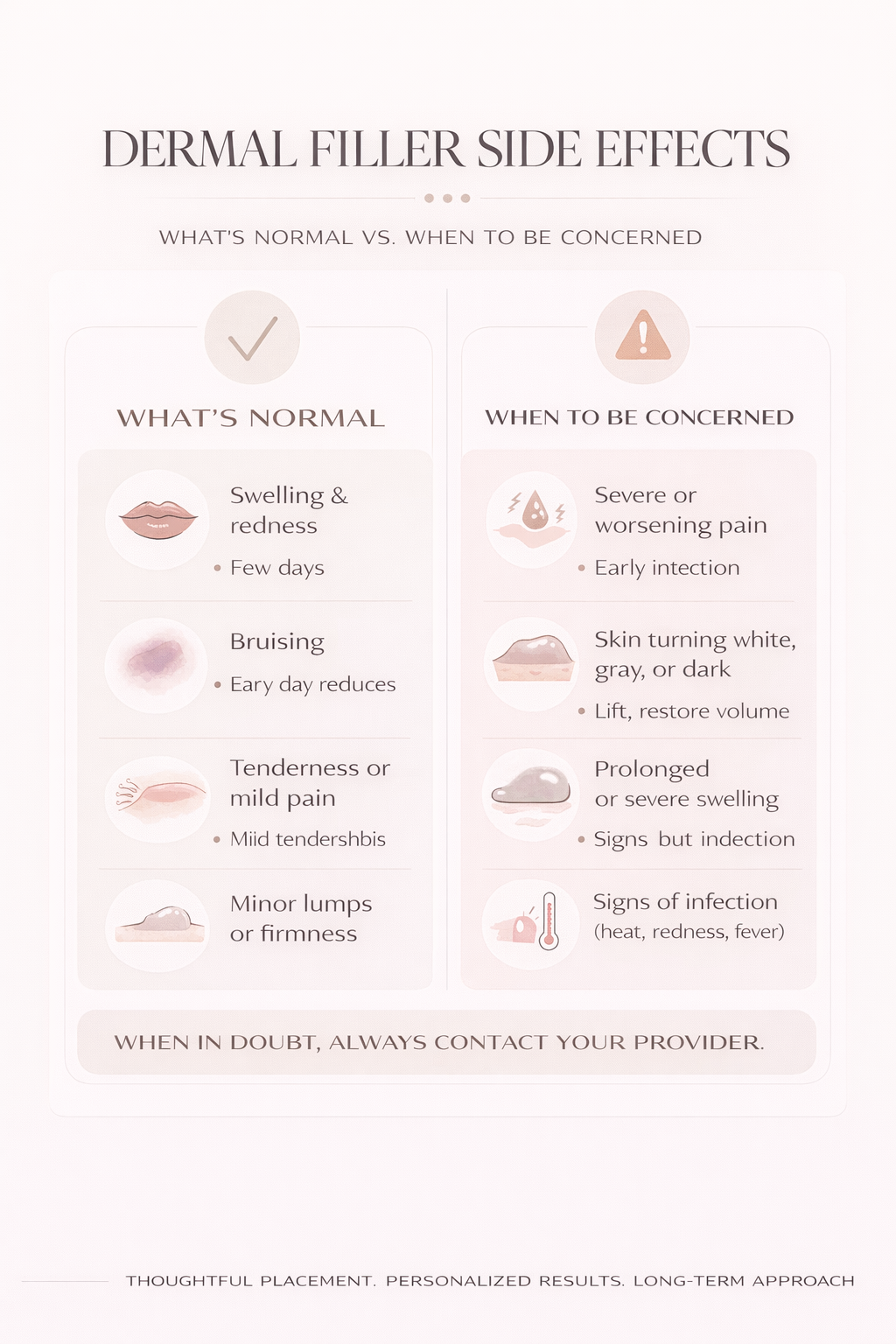
When Should You Be Concerned?
Warning Signs to Watch For
Contact your provider immediately if you experience:
Severe or worsening pain
Skin turning white, gray, or dark
Persistent swelling beyond 1–2 weeks
Signs of infection (heat, redness, fever)
When to Contact Your Provider
When in doubt, always reach out. Even minor concerns are worth evaluating to ensure proper healing.
How to Reduce the Risk of Side Effects
Choose an Experienced Provider
The most important step is selecting a qualified injector who understands:
Facial anatomy
Safe injection techniques
How to manage complications
Avoid seeking treatment based solely on cost or convenience.
Follow Pre- and Post-Treatment Instructions
Proper care before and after your dermal filler procedure can significantly reduce risk.
This may include:
Avoiding blood thinners before treatment
Using ice after injections
Avoiding strenuous activity for 24 hours
Be Honest about Medical History
Sharing your full medical history helps your provider:
Identify potential risks
Customize your treatment plan
Ensure safe use of injectable fillers
What to Expect During Recovery
First 24–48 Hours
Swelling and redness are most noticeable
Mild tenderness may occur
Ice and rest are recommended
First Week
Bruising begins to resolve
Swelling decreases
Results start to refine
Final Results Timeline
Final results from hyaluronic acid fillers are typically visible within 1–2 weeks once swelling fully subsides.
Final Thoughts: Understanding Risk Without Fear
While it’s important to understand the potential side effects of dermal fillers, it’s equally important to recognize that most reactions are mild, temporary, and manageable.
With proper technique, high-quality FDA-approved products, and a skilled provider, dermal filler treatments can be a safe and effective way to enhance your natural features and address concerns like sagging skin and volume loss.
With Thrive, You’re in Good Hands. Schedule Your Consultation Today
At Thrive Med Spa, safety and education are at the core of every treatment. We take a thoughtful, personalized approach to dermal filler injections, ensuring that each client feels confident, informed, and supported throughout their experience.
Interested in scheduling your Cincinnati-based dermal filler consultation? Reach out to the expert, caring team at Thrive today.
About Thrive Medical Spa
As Cincinnati’s trusted med spa for skin rejuvenation and aesthetic care, Thrive Med Spa specializes in natural, refined results using hyaluronic acid fillers. Our expertise in facial fillers and commitment to patient care ensure that every treatment is performed with precision, intention, and a deep understanding of aesthetic balance.
Frequently Asked Questions (FAQs)
What are the most common side effects of dermal fillers?
The most common side effects of dermal fillers include swelling, redness, bruising, and mild tenderness at the injection site. These are normal responses and typically resolve within a few days.
How long do dermal filler side effects last?
Most dermal filler side effects last between 2–7 days, depending on the area treated and the individual’s healing. Swelling may take up to 1–2 weeks to fully resolve.
Are lumps after dermal fillers normal?
Yes, small lumps or firmness after dermal filler injections can be normal and often resolve as the filler settles. Persistent lumps should be evaluated by your provider.
When should I worry about dermal filler side effects?
You should be concerned about dermal filler side effects if you experience severe pain, discoloration, or prolonged swelling. These may indicate a more serious complication and require prompt evaluation.
Can dermal filler side effects be reversed?
Yes, most hyaluronic acid-based fillers can be reversed using an enzyme called hyaluronidase. This makes them a safe and flexible option for treatment.
How can I reduce the risk of complications with dermal fillers?
To reduce risk, choose an experienced provider, follow all pre- and post-care instructions, and be honest about your medical history. Proper technique and care are key to safe results.