

One of the most common questions patients ask before their first filler appointment is, "Do dermal fillers hurt?" It's a completely understandable concern. While the idea of injections may feel intimidating, most people are pleasantly surprised by how comfortable the treatment actually is.
Modern dermal fillers are designed with patient comfort in mind. From topical numbing cream and fillers containing lidocaine to advanced injection techniques, today's treatments are far more comfortable than many people expect. In fact, most patients say the anticipation is much worse than the procedure itself.
If you're considering dermal fillers but feel nervous about discomfort, understanding what the treatment actually feels like can help ease your concerns. Here's what you can expect before, during, and after your appointment.
Key Takeaways
Dermal fillers typically cause only mild discomfort, with most patients experiencing brief pinching, pressure, or stinging during treatment.
Modern techniques help minimize pain, including topical numbing cream, lidocaine-containing fillers, fine needles, and cannulas.
Mild swelling, bruising, and tenderness are normal after treatment, with most symptoms improving within a few days and final results typically visible after about two weeks.
The Short Answer: Do Dermal Fillers Hurt?
The short answer is most patients experience only mild discomfort.
Dermal filler injections are generally very well tolerated. While you may feel brief pressure, pinching, or slight stinging during the procedure, most patients describe the experience as much easier than they expected.
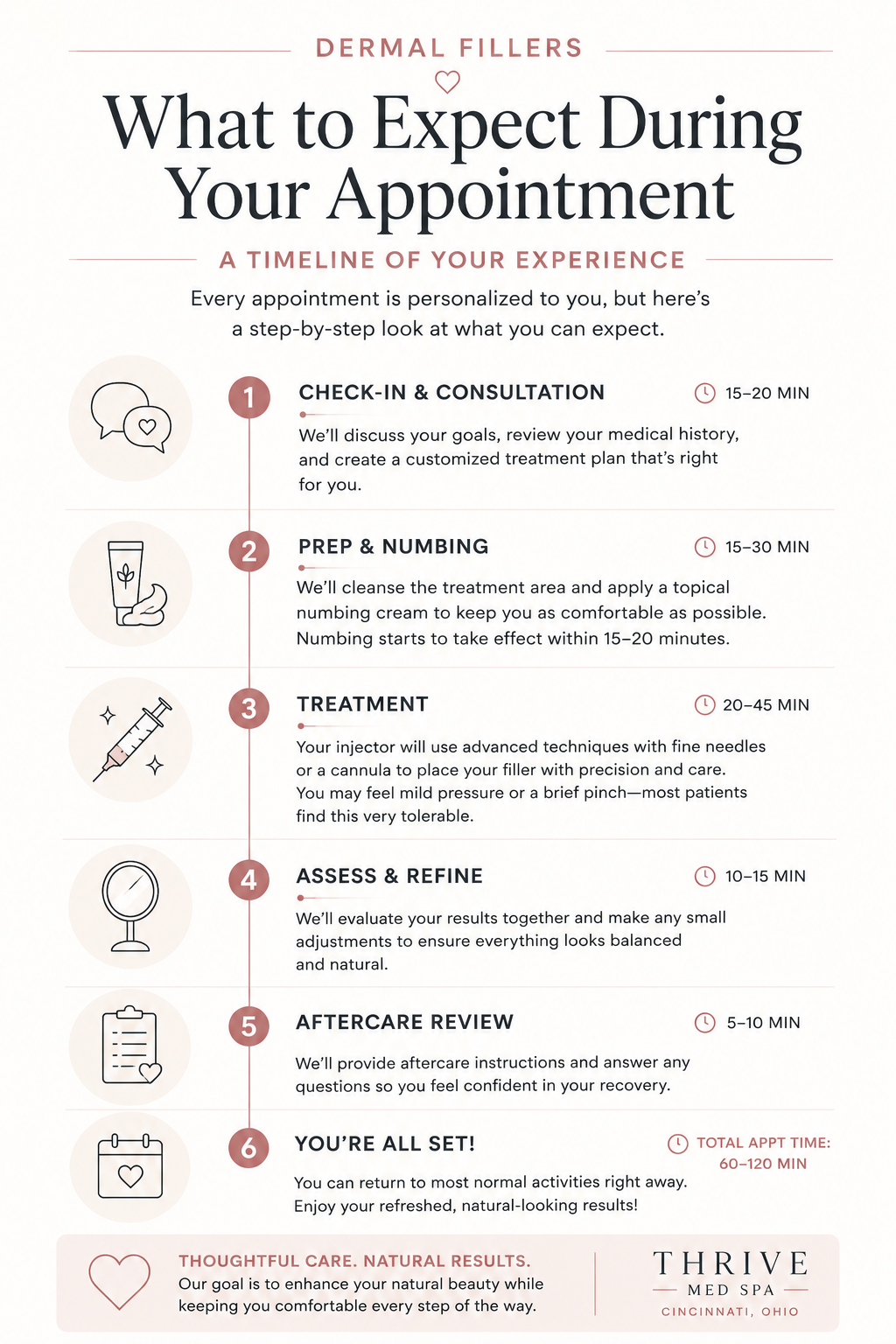
Unlike surgery, dermal fillers are a minimally invasive cosmetic treatment with very little recovery time. Most appointments last between 30 and 60 minutes, depending on the treatment areas being addressed.
Most Patients Describe the Treatment as Mildly Uncomfortable
Everyone experiences pain differently, but the majority of patients describe dermal filler injections using words like:
A quick pinch
Mild pressure
Slight stinging
Brief discomfort
A feeling of fullness during injection
The actual injection usually lasts only a few seconds at each treatment site. Because the procedure moves quickly, any discomfort is temporary and resolves almost immediately.
Many patients even return for additional treatments without hesitation because the experience is much more comfortable than they originally anticipated.
Why Pain Is Different for Everyone
Pain is highly individual. What feels mildly uncomfortable to one person may feel more noticeable to another.
Several factors influence your experience, including:
Your natural pain tolerance
The treatment area
Individual anatomy
Anxiety level
Previous cosmetic procedures
Amount of filler being placed
For example, someone receiving lip fillers for the first time may experience more sensitivity than someone having filler placed in the cheeks.
An experienced injector understands these differences and adjusts their technique to maximize patient comfort throughout the procedure.
What Do Dermal Fillers Actually Feel Like?
Many first time patients are surprised that dermal fillers don't feel like repeated painful injections.
Instead, the treatment is often described as a combination of:
A small pinch when the needle enters the skin
Gentle pressure beneath the skin
Mild stinging for a few seconds
A temporary feeling of fullness as the filler is placed
Some areas may also produce a sensation of pressure rather than sharp pain, particularly when a cannula is used instead of multiple needle injections.
Because filler is slowly placed beneath the skin, patients sometimes describe feeling the product moving or expanding within the tissue. While this sensation can feel unusual, it is generally not painful.
What Makes Dermal Fillers Less Painful?
Modern aesthetic medicine offers several ways to minimize discomfort during treatment.
Topical Numbing Cream
Before your injections begin, your provider will often apply a topical anesthetic or numbing cream to the treatment area.
This helps reduce sensation in the skin before the procedure starts and significantly improves comfort, particularly for sensitive areas like the lips.
The numbing cream typically remains on the skin for 15–30 minutes before treatment begins.
Fillers That Contain Lidocaine
Many of today's most popular dermal fillers contain lidocaine, a local anesthetic mixed directly into the filler itself.
As the product is injected, lidocaine begins working almost immediately to numb the surrounding tissue.
This means each subsequent injection often becomes more comfortable than the previous one.
Patients frequently notice that discomfort decreases as treatment progresses because the lidocaine continues taking effect.
Small Needles and Cannulas
The tools used during treatment also make a significant difference.
Depending on the treatment area, your provider may use either a very fine needle or a blunt-tip cannula.
A cannula is a flexible instrument with a rounded tip rather than a sharp point. Because it glides through tissue instead of cutting through it repeatedly, a cannula may reduce:
Bruising
Swelling
Tenderness
Overall discomfort
Many providers prefer cannulas for treatment areas such as the cheeks, jawline, temples, and under eyes because they often improve both comfort and safety.
An Experienced Injector Makes a Difference
Perhaps the biggest factor affecting comfort is the injector performing your treatment.
An experienced injector understands facial anatomy, uses gentle techniques, injects slowly, and communicates with patients throughout the procedure.
They also know when to use a needle versus a cannula, how to minimize pressure, and how to make adjustments if a patient feels uncomfortable.
At Thrive Med Spa, patient comfort is a priority. We take our time, explain each step of the process, and utilize techniques designed to make treatment as comfortable as possible while achieving beautiful, natural-looking results.
Do Certain Areas Hurt More Than Others?
Not every treatment area feels the same. Some parts of the face naturally contain more nerve endings and are therefore more sensitive than others.
Lip Fillers
Lip fillers are generally considered the most sensitive filler treatment.
Because the lips contain a high concentration of nerve endings, patients often experience brief pinching and pressure despite numbing cream and lidocaine. Fortunately, the injections are quick, and discomfort typically lasts only seconds at a time.
Cheek Fillers
Cheek fillers are usually among the most comfortable dermal filler treatments.
The cheeks have fewer nerve endings than the lips, so patients often describe the sensation as pressure rather than pain. Many patients are surprised by how little discomfort they experience during cheek enhancement.
Chin and Jawline Fillers
The chin and jawline are typically considered moderately comfortable treatment areas. Because these areas have thicker skin and are supported by bone, patients often describe the sensation as pressure rather than sharp pain.
When a cannula is used, fewer entry points are needed, which can further minimize discomfort and bruising. Most patients are pleasantly surprised by how tolerable chin and jawline filler treatments are.
Under Eye Fillers
The under eye area is delicate, but it is not necessarily the most painful.
Many patients describe under-eye filler as a feeling of mild pressure rather than pain. Since this area requires precision and conservative placement, experienced injectors often use a cannula to improve comfort while minimizing bruising and swelling.
Because the skin is thin, patients may notice slight tenderness afterward, but significant discomfort is uncommon.
What Can You Expect After Dermal Fillers?
Following treatment, it's completely normal to experience mild side effects as your body begins healing.
Most patients notice:
Mild tenderness
Swelling
Bruising
Redness at the injection sites
Slight soreness
Temporary firmness
A feeling of tightness or fullness
These symptoms are expected and typically improve significantly within the first few days.
Swelling is often most noticeable during the first 24–48 hours before gradually resolving over the following week. Bruising, if present, may last anywhere from several days to approximately two weeks depending on the individual.
While your filler results are visible immediately, your final outcome is generally appreciated once swelling has completely resolved, typically around two weeks after treatment.
How to Reduce Pain and Swelling After Dermal Fillers
Proper aftercare can make a significant difference in both comfort and recovery.
Follow Your Aftercare Instructions
Your provider will review detailed aftercare recommendations before you leave your appointment.
Following these instructions helps reduce inflammation, supports optimal healing, and allows your filler to settle naturally.
Every patient and treatment area is different, so individualized guidance is always important.
Avoid Intense Exercise
Although light activity is generally acceptable, strenuous exercise should be avoided for the first 24 hours.
Elevated heart rate and increased blood flow may contribute to additional swelling and bruising during the early stages of healing.
Giving your body a day to recover can help improve your overall experience.
Use Ice as Directed
Applying a cold compress or ice pack intermittently during the first day can help minimize swelling and provide additional comfort.
Always place a clean cloth between the ice and your skin, and avoid prolonged direct contact.
Ice should be used gently and only according to your provider's recommendations.
Avoid Alcohol and Blood-Thinning Medications Before Treatment
If medically appropriate and approved by your healthcare provider, avoiding alcohol and certain blood-thinning medications before treatment may help decrease bruising.
Common examples include:
Alcohol
Aspirin
Ibuprofen
Naproxen
Fish oil supplements
Vitamin E
Always discuss your current medications during your consultation, as some prescriptions should never be stopped without physician guidance.
When Is Pain After Dermal Fillers Not Normal?
While mild soreness and tenderness are expected, severe pain is not considered a normal part of recovery.
Contact your provider immediately if you experience:
Severe or worsening pain
Rapidly increasing swelling
White, gray, or blue skin discoloration
Blurred vision or vision changes
Fever or chills
Increasing redness that continues spreading
Pus or drainage from the injection site
Although serious complications are very rare, early recognition allows prompt treatment and is essential for the best possible outcome.
Your provider should always review these warning signs before you leave your appointment.
Tips If You're Nervous About Getting Dermal Fillers
Feeling nervous before your first filler appointment is completely normal. Fortunately, there are several ways to make your experience more comfortable.
Talk Openly with Your Injector
Don't hesitate to share your concerns.
Your injector wants you to feel comfortable and confident throughout the procedure. If you're anxious about pain, let them know before treatment begins.
Many patients feel significantly more relaxed simply by understanding exactly what to expect.
Eat Before Your Appointment
Having a balanced meal a few hours before treatment can help prevent lightheadedness and improve your overall comfort during the procedure.
Staying hydrated beforehand is also beneficial.
Practice Relaxation Techniques
Simple breathing exercises can help reduce anxiety during your appointment.
Taking slow, controlled breaths allows your facial muscles to remain relaxed, making treatment easier and often more comfortable.
Many patients find that listening to their injector's instructions and focusing on their breathing helps the appointment pass quickly.
Ask Questions During Your Consultation
One of the best ways to reduce anxiety is through education.
During your consultation, ask questions about:
The treatment process
Pain management
Recovery
Expected results
Aftercare
Understanding each step of the procedure often helps patients feel much more at ease before treatment begins.
Final Thoughts: Are Dermal Fillers Worth the Temporary Discomfort?
For the vast majority of patients, the answer is yes.
While dermal fillers may involve brief moments of discomfort, the treatment is typically quick, well tolerated, and far easier than many people expect. Modern techniques, including numbing cream, fillers containing lidocaine, fine needles, and cannulas, have made today's filler treatments remarkably comfortable.
Most patients experience only mild tenderness, temporary swelling, or minor bruising before returning to normal activities within a day or two.
When performed by an experienced injector, dermal fillers offer beautiful, natural looking results with minimal downtime, making the temporary discomfort well worth the long lasting confidence they provide.
Ready for Comfortable, Natural Looking Dermal Fillers? Schedule Your Cincinnati Consultation Today.
If you've been considering dermal fillers but have been worried about pain, we're here to help.
At Thrive Med Spa, patient comfort is one of our highest priorities. Every treatment begins with a personalized consultation where we discuss your goals, answer your questions, review pain management options, and create a customized treatment plan designed around your unique facial anatomy.
Whether you're interested in lip fillers, cheek enhancement, facial balancing, or restoring youthful volume, our experienced team is committed to providing thoughtful care and natural looking results.
Schedule your consultation today and discover how comfortable modern dermal fillers can be.
About Thrive Med Spa
Thrive Med Spa is a boutique medical spa in Cincinnati, Ohio, specializing in personalized aesthetic treatments and wellness services. We believe every patient deserves individualized care rooted in education, safety, and thoughtful treatment planning.
Our philosophy focuses on enhancing natural beauty, not changing it. Through conservative treatment, advanced injection techniques, and comprehensive consultations, we help patients achieve refreshed, balanced, and timeless results with confidence.
Frequently Asked Questions (FAQs)
Do dermal fillers hurt?
Most patients describe dermal fillers as mildly uncomfortable rather than painful. With numbing cream, lidocaine-containing fillers, and gentle injection techniques, discomfort is usually brief and very manageable.
Do dermal fillers hurt more than Botox?
For most patients, dermal fillers are slightly more noticeable than Botox because they involve placing product beneath the skin. However, both treatments are generally very well tolerated and require minimal recovery.
How painful are lip fillers compared to cheek fillers?
Lip fillers are typically more sensitive because the lips contain more nerve endings. Cheek fillers are usually described as pressure rather than pain.
Do dermal fillers contain numbing medication?
Yes. Many modern hyaluronic acid fillers contain lidocaine, which helps numb the treatment area during the procedure and improves patient comfort.
Can I request numbing cream before filler treatment?
Absolutely. Most practices routinely apply a topical anesthetic before treatment, particularly for sensitive areas like the lips.
How long does soreness last after dermal fillers?
Mild soreness and tenderness typically last a few days. Most patients notice significant improvement within 48 to 72 hours.
Is it normal to have pain the day after getting fillers?
Yes. Mild tenderness, tightness, and soreness are normal during the first day or two after treatment. Severe or worsening pain should always be evaluated by your provider.
What can I do to reduce pain and swelling after fillers?
Following your aftercare instructions, using ice as directed, avoiding strenuous exercise, and limiting alcohol immediately after treatment can all help reduce swelling and improve recovery.
Which area of the face is most sensitive for filler injections?
The lips are generally considered the most sensitive treatment area because of their high concentration of nerve endings. Fortunately, topical numbing cream and lidocaine make treatment much more comfortable.
Should I take pain medication before my appointment?
Most providers recommend avoiding aspirin, ibuprofen, and other blood-thinning medications before treatment unless medically necessary. If you have concerns about discomfort, discuss pain management options during your consultation.
When should I worry about pain after dermal fillers?
Contact your provider immediately if you experience severe pain, worsening swelling, skin discoloration (white, gray, or blue), vision changes, fever, or signs of infection. Although these complications are rare, prompt evaluation is important.