
Are Dermal Fillers Safe? Risks, Side Effects, and What You Need to Know

Dermal fillers have become one of the most popular non-surgical cosmetic treatments in the world, helping millions of people restore lost volume, soften facial lines, and enhance natural facial contours. Despite their popularity, many patients still wonder: Are dermal fillers safe?
The short answer is yes, when performed by a qualified, licensed provider using FDA-approved products, dermal fillers have an excellent safety profile. Like any cosmetic procedure, however, filler treatment carries potential risks and side effects. Understanding these risks before your appointment allows you to make an informed decision and choose a provider who prioritizes both safety and natural-looking results.
In this guide, the team at Thrive Med Spa will discuss what dermal fillers are made of, common side effects, potential complications, and how to maximize the safety of your treatment.
Key Takeaways
Dermal fillers are generally safe when administered by a qualified, experienced provider using FDA-approved products.
Temporary swelling, bruising, redness, and tenderness are common, while serious complications such as vascular occlusion are rare.
Choosing an experienced injector, discussing your medical history, and following proper aftercare can help reduce risks and support safe, natural-looking results.
The Short Answer: Are Dermal Fillers Safe?
For most healthy adults, dermal fillers are considered a safe and effective treatment for facial rejuvenation and volume restoration. Millions of filler treatments are performed each year with high patient satisfaction and a low rate of serious complications.
While no cosmetic procedure is completely risk-free, the vast majority of patients experience only mild, temporary side effects that resolve within several days.
Most Dermal Fillers Have Strong Safety Records
Modern dermal fillers have been extensively studied and used in aesthetic medicine for decades. Many products have undergone rigorous clinical testing before receiving FDA approval for cosmetic use.
The most commonly used fillers today are made from hyaluronic acid, a naturally occurring substance already found within the body. Because hyaluronic acid is biocompatible, these fillers are generally well tolerated and have a favorable safety profile.
When injected properly, facial fillers can provide subtle, natural-looking results while preserving normal facial movement and expression.
Safety Depends on More Than the Product
Although the filler itself plays an important role, the safety of your treatment depends just as much on the person performing it.
A qualified provider understands:
Facial anatomy
Blood vessel locations
Appropriate injection techniques
Product selection
Emergency management
Even the safest dermal filler can lead to complications if injected improperly. Choosing an experienced injector is one of the most important decisions you can make.
What Are Dermal Fillers Made Of?
Not all facial fillers are created equally. Different products are designed for different treatment goals, longevity, and injection depths.
Hyaluronic Acid Fillers
The majority of filler treatments performed today utilize hyaluronic acid (HA) fillers.
Hyaluronic acid is a naturally occurring sugar molecule that attracts and retains water, helping the skin remain hydrated and youthful. As we age, our natural hyaluronic acid decreases, contributing to volume loss and skin laxity.
Popular FDA-approved hyaluronic acid filler brands include:
Juvéderm®
Restylane®
RHA Collection®
Revanesse®
These fillers can be used to treat:
Lips
Cheeks
Chin
Jawline
Nasolabial folds
Marionette lines
Temples
Facial balancing
One of the greatest advantages of hyaluronic acid fillers is that they can typically be dissolved using hyaluronidase if adjustments are needed or complications occur.
Other Types of Products
Although hyaluronic acid fillers are the most commonly used, several additional filler products exist.
Calcium Hydroxylapatite (Radiesse®)
Radiesse provides immediate structural support while also stimulating collagen production over time. It is frequently used in the jawline, chin, and hands.
Poly-L-Lactic Acid (Sculptra®)
Rather than acting as a traditional filler, Sculptra stimulates the body's natural collagen production. Results develop gradually over several months and are ideal for patients experiencing generalized facial volume loss.
Polymethylmethacrylate (PMMA)
PMMA fillers contain tiny microspheres suspended within collagen. These fillers are considered permanent and are used less commonly today due to their inability to be dissolved.
Which Fillers Are Considered the Safest?
While every patient is different, hyaluronic acid fillers are generally considered the safest option for most cosmetic patients.
Their excellent safety profile is due to several factors:
Extensive FDA approval history
Excellent biocompatibility
Natural integration into tissue
Reversible with hyaluronidase
Predictable results
For this reason, many experienced injectors prefer hyaluronic acid products when performing facial rejuvenation and facial balancing treatments.
Common Side Effects of Dermal Fillers
Fortunately, most patients experience only mild side effects following filler treatment. These are expected responses to the injection process and typically improve within several days.
Common side effects include:
Mild swelling
Bruising
Redness at the injection site
Tenderness
Temporary firmness
Minor asymmetry
Temporary lumps or unevenness
Swelling is often most noticeable during the first 24–48 hours before gradually improving.
Bruising varies depending on the treatment area, individual anatomy, medications, and lifestyle factors.
Temporary lumps are also common immediately after treatment as the filler settles into the tissue. In many cases, these soften naturally over the following days or weeks.
Patients are typically advised to avoid strenuous exercise, alcohol, excessive heat exposure, and unnecessary pressure on the treated area for the first 24 hours to help minimize swelling and bruising.
What Are the Risks of Dermal Fillers?
Although uncommon, dermal fillers do carry potential risks that should be discussed during your consultation.
Possible risks include:
Infection
Any time the skin is punctured, there is a small risk of infection. Proper skin preparation and sterile injection technique help minimize this risk.
Allergic Reactions
True allergic reactions are uncommon with hyaluronic acid fillers because the substance naturally exists within the body. However, reactions to lidocaine or other components are still possible.
Filler Migration
Filler migration occurs when product moves away from its intended location. This may result from overfilling, poor injection technique, repeated treatments without proper assessment, or individual anatomy.
Nodules and Granulomas
Occasionally, patients may develop small nodules beneath the skin or delayed inflammatory reactions called granulomas. These are uncommon but may require treatment depending on severity.
Asymmetry or Unsatisfactory Results
Not every concern represents a medical complication. Sometimes patients simply feel their results are uneven or not aligned with their expectations.
This is why an individualized consultation, conservative treatment planning, and follow-up appointments are essential to achieving beautiful, natural-looking results.
Can Dermal Fillers Cause Serious Complications?
Although serious complications from dermal fillers are rare, they are important to understand before undergoing treatment. An experienced injector will discuss these risks during your consultation and have protocols in place to recognize and manage them should they occur.
Fortunately, these complications represent a very small percentage of all filler treatments, especially when injections are performed by a licensed provider with advanced knowledge of facial anatomy.
Vascular Occlusion
The most significant complication associated with dermal fillers is vascular occlusion.
A vascular occlusion occurs when filler blocks a blood vessel, reducing or stopping blood flow to the surrounding tissue. This may happen if filler is accidentally injected into an artery or compresses a vessel externally.
Although uncommon, vascular occlusion requires immediate recognition and treatment.
Early signs may include:
Severe or increasing pain
Skin turning white or pale
Gray or blue discoloration
A mottled or lace-like appearance of the skin
Delayed capillary refill
When recognized promptly, hyaluronic acid fillers can often be treated with hyaluronidase, an enzyme that dissolves the filler and helps restore blood flow.
Skin Necrosis
If blood flow remains compromised for an extended period, skin necrosis may occur.
Skin necrosis refers to damage or loss of skin tissue caused by inadequate oxygen delivery. Early intervention dramatically reduces the likelihood of permanent tissue injury, which is why experienced providers educate patients about warning signs before they leave the office.
Fortunately, skin necrosis is extremely rare when treatment is performed by knowledgeable injectors who understand vascular anatomy and emergency management.
Vision Problems and Blindness
One of the rarest, but most serious, potential complications of dermal filler injections is vision loss.
This can occur if filler inadvertently enters a blood vessel that communicates with the arteries supplying the eye. Because of the complex vascular anatomy of the face, certain treatment areas require exceptional caution, including the glabella, nose, forehead, and temple.
Permanent blindness from dermal fillers is extraordinarily rare, but it reinforces why provider experience matters so much. A skilled injector understands high-risk anatomical zones, uses appropriate injection techniques, and recognizes when treatment should be modified or avoided altogether.
Why These Events Are Rare
While stories about serious filler complications can understandably feel alarming, it's important to keep them in perspective.
Millions of dermal filler treatments are performed each year safely. Serious complications remain exceptionally uncommon, particularly when patients choose a qualified provider who:
Has advanced training in facial anatomy
Uses FDA-approved products
Performs comprehensive consultations
Maintains emergency medications and protocols
Practices conservative injection techniques
Continues ongoing education
The combination of proper patient selection, excellent technique, and early recognition significantly contributes to the outstanding safety record of modern dermal fillers.
Who Is a Good Candidate for Dermal Fillers?
Dermal fillers are an excellent option for many healthy adults seeking subtle, non-surgical facial rejuvenation.
Good candidates often include individuals who want to:
Restore age-related volume loss
Improve facial balance and proportions
Enhance facial contours
Soften deeper facial folds
Improve chin or jawline definition
Achieve natural-looking results without surgery
Whether you're noticing early signs of aging or simply hoping to enhance your natural features, a personalized consultation helps determine whether filler treatment aligns with your goals.
Rather than changing the way you look, today's approach to facial fillers focuses on restoring youthful support while maintaining your unique facial characteristics.
Who May Need to Avoid Fillers
Although dermal fillers are safe for many patients, treatment may not be appropriate for everyone.
You may be advised to postpone or avoid filler treatment if you:
Are pregnant or breastfeeding
Have an active skin infection near the injection site
Have uncontrolled autoimmune or inflammatory conditions
Have experienced severe allergic reactions to filler ingredients
Have unrealistic cosmetic expectations
A thorough consultation allows your provider to review your medical history, discuss potential risks, and determine the safest treatment plan for your individual needs.
How to Make Dermal Fillers Safer
While every cosmetic procedure carries some level of risk, there are several steps patients can take to maximize safety and achieve beautiful results.
Choose an Experienced Injector
The single most important factor influencing your outcome is the person performing your injections.
Choose a licensed provider with extensive experience in facial anatomy, aesthetic medicine, and complication management. Ask about training, experience, before-and-after photos, and how they manage emergencies.
An experienced injector prioritizes facial harmony over simply adding volume.
Verify FDA-Approved Products
Always confirm that your provider uses FDA-approved dermal fillers obtained through legitimate medical distributors.
Counterfeit or illegally imported products have been associated with significantly higher complication rates and should never be used.
Attend a Consultation First
Every filler treatment should begin with a comprehensive consultation.
During this appointment, your provider should review:
Medical history
Current medications
Previous cosmetic procedures
Treatment goals
Facial anatomy
Risks and benefits
Alternative treatment options
This personalized approach ensures treatment recommendations are tailored specifically to your needs rather than following a one-size-fits-all approach.
Understand the Risks Before Treatment
Informed patients make better decisions.
Before your appointment, make sure you understand:
Expected recovery
Common side effects
Potential complications
Expected longevity
Follow up recommendations
When to contact your provider
Feeling comfortable asking questions is an important part of choosing the right practice.
Follow All Aftercare Instructions
Proper aftercare helps minimize swelling, bruising, and discomfort while supporting optimal healing.
Your provider may recommend:
Avoiding strenuous exercise for 24 hours
Limiting alcohol immediately after treatment
Sleeping with your head elevated the first night
Avoiding excessive heat exposure
Following all post-treatment instructions carefully
Most patients can return to normal activities quickly while watching swelling gradually improve over several days.
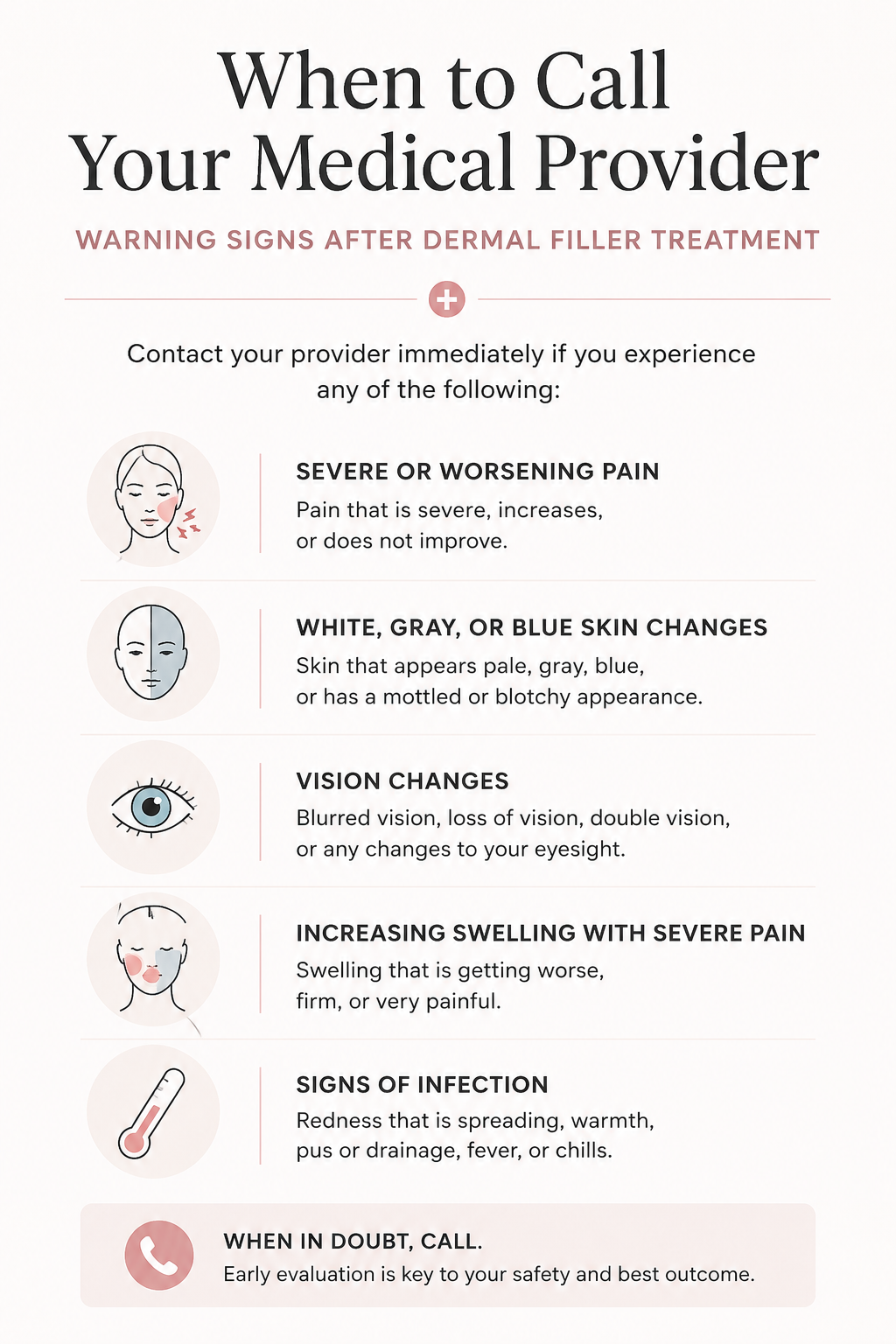
Warning Signs You Should Contact Your Provider Immediately
Although most side effects are mild, certain symptoms require immediate evaluation.
Contact your provider right away if you experience:
Severe or worsening pain
White, gray, or blue skin discoloration
Vision changes or blurred vision
Increasing swelling accompanied by severe pain
Fever or chills
Pus or drainage from the injection site
Rapidly spreading redness
Skin that becomes cool or mottled
Early treatment is critical for managing rare complications effectively.
Final Thoughts (and Why Provider Selection Matters Most)
Dermal fillers are among the safest and most effective non-surgical cosmetic treatments available today when performed by a qualified, experienced injector. While mild swelling, bruising, and tenderness are common and expected, serious complications remain extremely rare. The key to a safe, successful outcome isn't simply choosing the right product—it's choosing the right provider.
At Thrive Med Spa, we believe aesthetic medicine should never be about chasing trends or overfilling. Every treatment begins with a comprehensive consultation where we take the time to understand your goals, evaluate your facial anatomy, and develop a personalized treatment plan designed to enhance your natural features. Our philosophy centers around thoughtful, conservative treatment that prioritizes safety, balance, and long-term facial health.
When performed with precision and intention, dermal fillers can restore youthful facial support, improve harmony, and deliver beautiful, natural-looking results that help you feel like the best version of yourself.
Get a Dermal Filler Consultation Tailored to You. Book Your Cincinnati Appointment Today.
If you're considering dermal fillers in Cincinnati, the first step is a personalized consultation with an experienced injector.
At Thrive Med Spa, we'll discuss your concerns, evaluate your facial anatomy, review your medical history, and recommend a customized treatment plan designed around your unique features and goals. Whether you're interested in restoring age-related volume loss, enhancing facial balance, or achieving subtle facial rejuvenation, our team is committed to delivering safe, natural-looking results through individualized care.
Schedule your consultation today and discover how thoughtful aesthetic medicine can help you look refreshed while still looking like yourself.
About Thrive Med Spa
Thrive Med Spa is a boutique medical spa located in Cincinnati, Ohio, specializing in natural-looking aesthetic treatments and personalized wellness care. Our team believes confidence begins with thoughtful, evidence-based care tailored to each individual.
From dermal fillers and wrinkle relaxers to collagen-stimulating treatments, medical-grade skincare, and wellness services, every recommendation is customized to help patients age gracefully while preserving their unique facial features. We prioritize education, safety, and long-term relationships, ensuring every patient feels informed, comfortable, and confident throughout their treatment journey.
Frequently Asked Questions
Are dermal fillers FDA approved?
Many dermal fillers are FDA-approved for cosmetic use, including several hyaluronic acid filler products. FDA approval means the filler has undergone extensive clinical testing for safety and effectiveness when used as directed by a qualified provider.
What is the safest type of dermal filler?
Hyaluronic acid fillers are generally considered the safest type of dermal filler because they are biocompatible, have a long history of clinical use, and can be dissolved with hyaluronidase if needed. Your provider can recommend the best product based on your anatomy and treatment goals.
Can dermal fillers cause blindness?
Yes, but it is extremely rare. Blindness may occur if filler enters a blood vessel connected to the eye's circulation. This is why choosing an experienced, licensed provider with advanced knowledge of facial anatomy is essential.
How common are serious dermal filler complications?
Serious complications from dermal fillers are very uncommon. Millions of filler treatments are safely performed each year, and most patients experience only temporary side effects such as swelling, bruising, or tenderness.
Are dermal fillers safer than plastic surgery?
Dermal fillers are less invasive than surgical procedures and generally involve shorter recovery times and lower overall risk. However, every cosmetic procedure carries potential risks, making proper patient selection and provider expertise important regardless of the treatment chosen.
How long do dermal fillers stay in your body?
The longevity of dermal fillers depends on the product used and the treatment area. Most hyaluronic acid fillers last between 6 and 18 months, while collagen-stimulating treatments like Sculptra can provide results lasting two years or longer.
What are the signs of a bad filler injection?
Persistent asymmetry, severe pain, white or blue skin discoloration, worsening swelling, vision changes, or signs of infection should all be evaluated immediately. If you experience any of these symptoms, contact your provider without delay.
Who should not get dermal fillers?
Dermal fillers may not be appropriate for individuals who are pregnant, breastfeeding, have an active skin infection, certain autoimmune conditions, or known allergies to filler ingredients. A consultation with a qualified provider is the best way to determine if treatment is right for you.
Are lip fillers more dangerous than cheek fillers?
Every treatment area has unique anatomical considerations. Neither lip fillers nor cheek fillers are inherently more dangerous when performed by an experienced injector using appropriate techniques and FDA-approved products.
How do I choose a qualified dermal filler provider?
Look for a licensed medical professional with specialized training in aesthetic medicine, extensive knowledge of facial anatomy, experience with managing complications, and a portfolio of natural-looking results. A thorough consultation, individualized treatment plan, and emphasis on patient education are all signs of a provider who prioritizes safety and quality care.