
Is an Infrared Sauna Safe? What You Need to Know

Infrared sauna therapy has grown rapidly in popularity as more people look for non-invasive ways to support relaxation, recovery, and overall wellness. From athletes to busy professionals managing stress, many individuals are incorporating infrared sauna sessions into their routines for their potential health benefits.
But one important question remains: Is an infrared sauna safe?
If you’re considering using an infrared sauna in Cincinnati or simply researching infrared sauna use, this guide will walk you through what infrared heat does to your body, potential side effects, who should exercise caution, and how to use infrared saunas responsibly.
At Thrive Med Spa in Mariemont, we believe education and safety should always come first.
Key Takeaways
Infrared sauna therapy is generally safe for most healthy adults when used in moderation, with proper hydration and session lengths typically around 20–40 minutes.
While benefits include improved circulation, relaxation, and recovery, users should be aware of potential side effects (like dehydration, dizziness, and overheating) and adjust usage accordingly.
Safe use comes down to simple habits: hydrate before and after, start with shorter sessions, listen to your body, and consult a doctor if you have underlying health conditions.
What an Infrared Sauna Does to Your Body
Unlike traditional saunas, which heat the air around you, an infrared sauna uses infrared light and infrared waves to warm your body directly. Infrared lamps emit far infrared radiation that penetrates the skin, gently increasing your core body temperature without dramatically raising ambient air temperature.
When infrared heat penetrates deeper into tissue, several physiological responses occur:
Blood vessels dilate, increasing circulation
Heart rate rises slightly
Sweat glands activate
Muscles begin to relax
Your nervous system shifts toward a more relaxed state
Because infrared light directly warms the body rather than heating surrounding air, many people find infrared sauna treatments more comfortable than traditional saunas.
Why These Effects Matter
The rise in core body temperature stimulates circulation and mild cardiovascular activity, similar to light exercise. Increased blood flow can support recovery, relaxation, and improved oxygen delivery to tissues. Sweat production helps regulate temperature and may contribute to skin refresh and detox support through natural elimination pathways.
These mechanisms explain many of the reported infrared sauna benefits, but understanding how they affect your body also clarifies how to use an infrared sauna safely.
Are Infrared Saunas Safe for Most People?
For most healthy adults, infrared sauna therapy is considered safe when used properly and in moderation. Numerous studies on sauna bathing, including both traditional saunas and far infrared saunas, suggest that regular sauna use can be well tolerated in healthy individuals.
However, like any heat-based therapy, infrared sauna use should be approached thoughtfully. The body is being exposed to heat stress, and individual health concerns can affect how well you tolerate that stress.
For individuals without significant medical conditions, moderate infrared sauna sessions of 20 to 40 minutes are generally safe when proper hydration and temperature guidelines are followed.
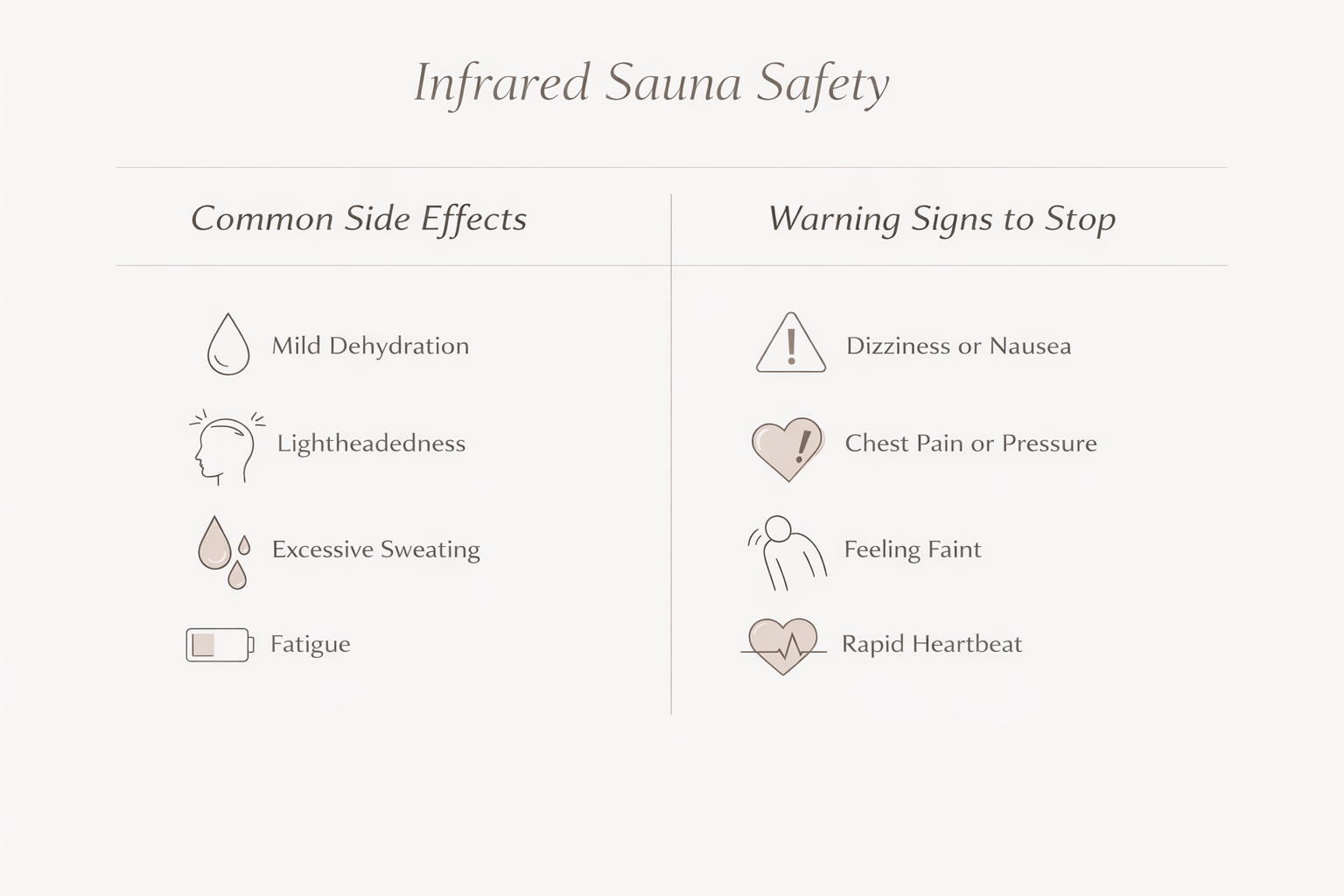
Potential Side Effects to Be Aware Of
Although infrared sauna therapy is widely considered safe, there are potential side effects that users should understand before beginning treatment, including:
Dehydration
Dizziness or lightheadedness
Overheating
Dehydration
Because infrared sauna sessions induce sweating, fluid loss can occur. If you do not replace lost fluids, dehydration may develop. Symptoms can include dry mouth, fatigue, headache, or muscle cramps.
Proper hydration before and after using an infrared sauna is essential to maintain balance.
Dizziness or Lightheadedness
A rise in core body temperature combined with vasodilation can occasionally lead to dizziness, particularly if you stand up quickly after a session. Blood pressure changes may contribute to this sensation.
This is why it is important to exit the sauna slowly and allow your body to cool gradually.
Overheating
While infrared heat is generally more tolerable than traditional saunas, overheating can still occur. Spending too long in the sauna immediately after intense exercise or without hydration increases risk.
Monitoring session length and listening to your body reduces the chance of overheating.
Who Should Use Caution or Talk to a Doctor
Certain individuals should consult a healthcare provider before using an infrared sauna, including:
Pregnant individuals
Those with cardiovascular disease
Individuals with uncontrolled high blood pressure
Those prone to heat intolerance
Individuals with autoimmune conditions
People taking medications that affect blood pressure or sweating
If you have underlying health concerns, discussing infrared sauna therapy with your provider ensures safe participation.
Is Infrared Radiation Dangerous?
One common misconception involves the term infrared radiation. The word “radiation” often raises concern, but infrared radiation is part of the natural light spectrum and is not the same as harmful ultraviolet (UV) radiation.
Infrared waves are non-ionizing, meaning they do not damage DNA or skin cells in the way UV radiation can. Far infrared saunas use infrared light to gently warm the body without exposing you to harmful rays.
When used appropriately, infrared radiation in sauna therapy is considered safe for human exposure.
How to Use an Infrared Sauna Safely
Using an infrared sauna safely involves simple, practical precautions, like:
Hydrating before and after
Limiting session length
Avoiding alcohol
Listening to your body
Hydrate Before and After
Drink water before your infrared sauna session and rehydrate afterward. Because sweating reduces fluid levels, replacing water supports healthy circulation and temperature regulation.
Limit Session Length
Begin with shorter sessions (10 to 20 minutes) and gradually increase to 20 to 30 minutes as tolerated. Avoid extended sessions beyond recommended time frames.
Avoid Alcohol
Alcohol can impair temperature regulation and increase dehydration risk. Avoid alcohol before and immediately after sauna sessions.
Listen to Your Body
Pay attention to how you feel. If you experience discomfort, dizziness, nausea, or excessive fatigue, end the session.
Using infrared saunas responsibly ensures you maximize benefits while minimizing risk.
Signs You Should End a Session
You should exit the sauna immediately if you experience:
Dizziness
Nausea
Chest discomfort
Headache
Feeling faint
Rapid heartbeat beyond mild elevation
After exiting, sit down, hydrate, and allow your body to cool gradually.
Is It Safe to Use an Infrared Sauna Regularly?
For most healthy adults, regular infrared sauna sessions two to four times per week are well tolerated. Research on sauna bathing suggests that consistent use may support cardiovascular health benefits when used appropriately.
However, more is not always better. Daily use may be appropriate for some individuals but should be evaluated based on overall hydration, recovery, and personal health status.
Moderation and consistency are key.
What Makes a Professional Med Spa Safer Than Home Use
While home infrared saunas are increasingly popular, professional settings provide several safety advantages.
At a medical spa:
Equipment is monitored and maintained
Temperature settings are controlled
Staff can provide guidance
Health screening occurs beforehand
Support is available if you feel unwell
Using infrared sauna treatments in a professional setting reduces risk and ensures best practices are followed.
Final Thoughts on Infrared Sauna Safety
Infrared sauna therapy offers promising health benefits, including improved circulation, relaxation, muscle recovery, and stress reduction. For most healthy individuals, infrared sauna use is safe when approached responsibly.
Understanding how infrared heat affects core body temperature, hydration levels, and circulation allows you to enjoy sauna therapy confidently. By hydrating properly, limiting session time, and monitoring your body’s signals, you can use an infrared sauna safely and effectively.
Want to Experience an Infrared Sauna for Yourself? Try It at Thrive Med Spa
If you are considering infrared sauna therapy in Greater Cincinnati, Thrive Med Spa offers professional infrared sauna sessions in a comfortable, medically guided environment. We prioritize safety, personalization, and education so you can experience infrared sauna benefits with confidence.
About Thrive Medical Spa
Thrive Med Spa is a modern medical spa located in Mariemont, Ohio, serving clients throughout Cincinnati and surrounding communities. Thrive blends aesthetic expertise with evidence-based wellness therapies, including infrared sauna sessions and red light treatments. Our mission is simple: cultivate your beauty and let confidence thrive.
Frequently Asked Questions (FAQs)
Is an infrared sauna safe for most people?
Yes, an infrared sauna is safe for most healthy adults when used properly. Infrared sauna therapy should be practiced in moderation with adequate hydration and appropriate session length.
How safe is infrared sauna therapy compared to traditional saunas?
Infrared sauna therapy is generally considered as safe as traditional saunas when used responsibly. Because infrared light directly warms the body at lower air temperatures, many people find it more tolerable.
Is it safe to use an infrared sauna regularly?
For most healthy individuals, regular infrared sauna sessions are safe when done in moderation. Monitoring hydration and overall health status is important.
What are the side effects of an infrared sauna?
Potential side effects of infrared sauna use include dehydration, dizziness, and overheating. These effects are usually mild and preventable with proper precautions.
Can an infrared sauna cause dehydration?
Yes, an infrared sauna can cause dehydration if fluid losses from sweating are not replaced. Drinking water before and after sessions reduces this risk.
Why do I feel dizzy after using an infrared sauna?
Dizziness after using an infrared sauna may occur due to blood vessel dilation and mild blood pressure changes. Standing slowly and hydrating can help prevent this.
Can you overheat in an infrared sauna?
Yes, overheating is possible if session length is excessive or hydration is inadequate. Monitoring core body temperature and limiting session time prevents this.
What should you do if you feel lightheaded during an infrared sauna session?
If you feel lightheaded during an infrared sauna session, exit the sauna immediately, sit down, and hydrate. Allow your body to cool gradually.
What is the safest way to start infrared sauna therapy?
The safest way to start infrared sauna therapy is with short sessions at moderate temperatures while maintaining hydration. Gradually increase duration as tolerated.