
What Is an Infrared Sauna? Everything You Need to Know Before Trying One
Infrared saunas have quickly become a popular wellness offering in medical spas and holistic wellness spaces. Many people are curious about how infrared saunas work, how they feel, and whether they offer real health benefits. If you are considering booking your first infrared sauna session or simply want to understand how this form of sauna therapy differs from a traditional sauna, this guide will walk you through everything you need to know.
At Thrive Med Spa located in Mariemont, Ohio, infrared sauna therapy is offered as a supportive wellness experience designed to promote relaxation, recovery, and overall well-being. Below, we break down how infrared saunas operate, who they are good for, and what to expect during a session.
Key Takeaways
Infrared saunas heat the body directly using infrared wavelengths, creating a warming and sweating response at lower air temperatures than traditional steam saunas.
People use infrared sauna therapy for relaxation, stress reduction, circulation support, and post-activity recovery, making it a popular wellness tool for athletes and individuals seeking restorative benefits.
First-time users can expect a calm, gentle, and beginner-friendly session lasting 15–30 minutes, with hydration and comfort being emphasized for a safe and enjoyable experience.
What Is an Infrared Sauna?
An infrared sauna is a type of sauna that uses infrared light to gently heat the body directly rather than warming the surrounding air. Unlike traditional steam saunas that rely on hot air and high humidity, infrared saunas operate at a lower air temperature while still producing a deep warming effect.
Infrared saunas use invisible infrared wavelengths that penetrate the skin and tissues, creating heat from the inside out. This form of infrared therapy is often described as more comfortable than traditional steam saunas, especially for individuals who find high heat environments difficult to tolerate.
Infrared saunas offer a controlled, dry heat environment that supports relaxation and sweating without the intense hot air commonly associated with traditional sauna experiences.
How Infrared Saunas Work
Infrared saunas work by using infrared heaters to emit infrared waves that are absorbed by the body. These infrared sauna heaters produce infrared light that falls within the mid-infrared and far-infrared spectrum. These wavelengths are not visible to the eye but are naturally produced by the sun and felt as warmth on the skin.
Because infrared heat warms the body directly, the air temperature inside the sauna remains lower than that of traditional steam saunas. This allows many people to enjoy longer sauna sessions with less discomfort while still achieving a deep sweat.
Infrared sauna therapy focuses on consistent heat delivery rather than extreme temperature, which is one of the reasons many wellness professionals recommend infrared saunas for relaxation and recovery.
Infrared Sauna vs. Traditional Sauna
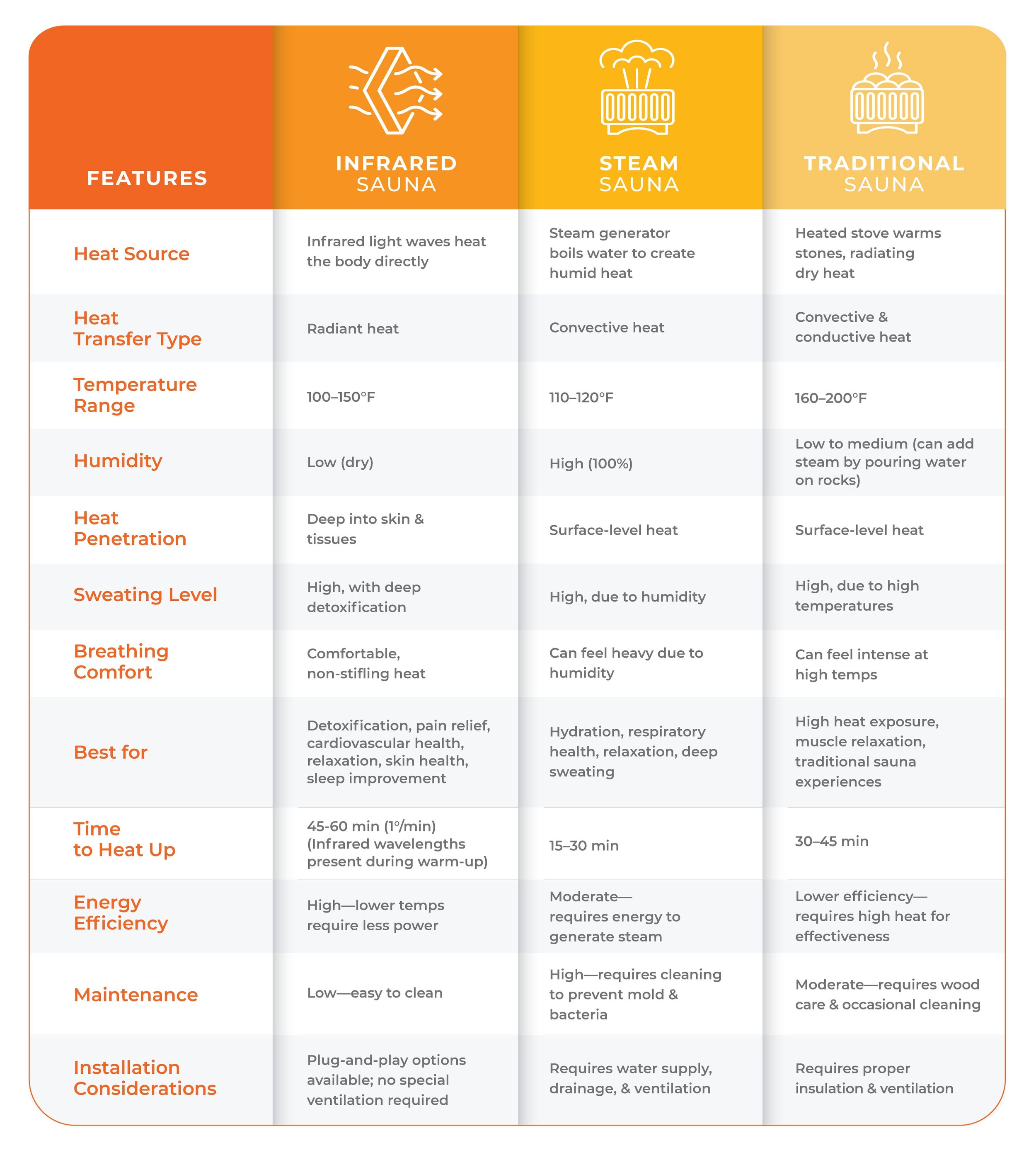
When comparing an infrared sauna vs a traditional sauna, the primary difference lies in how heat is delivered.
A traditional sauna heats the air around you using hot stones or steam, often reaching very high temperatures. Traditional steam saunas rely on hot air and humidity to warm the body externally.
Infrared saunas, on the other hand, use infrared waves to heat the body directly. The air temperature stays lower, yet the body experiences a similar warming effect. Many people report that infrared saunas feel gentler and easier to tolerate than traditional sauna environments.
Both sauna types can support relaxation and sweating, but infrared saunas operate using a different mechanism that appeals to individuals looking for a more comfortable sauna therapy experience.
Reported Wellness Benefits
Infrared sauna benefits are often discussed in the context of overall wellness and recovery. While experiences can vary from person to person, many individuals incorporate infrared sauna therapy into their routine for the following reported benefits:
Relaxation + Stress Reduction
Muscle Recovery + Joint Relief
Circulation Support
Skin + Sweat Response
Cardiovascular Effects (Mild)
Relaxation + Stress Reduction
One of the most commonly reported benefits of infrared sauna sessions is deep relaxation. The gentle infrared heat can help calm the nervous system and encourage a sense of mental ease. Many people find that regular sauna sessions support stress relief and improved mood, making infrared therapy a valuable addition to a self-care routine.
Muscle Recovery + Joint Relief
Infrared heat is often used by active individuals seeking muscle recovery support. The warmth may help relax tight muscles and joints after physical activity. Some people incorporate infrared sauna sessions as part of their post-workout recovery plan to help reduce stiffness and promote comfort.
Circulation Support
The warming effect of infrared saunas may encourage increased circulation as the body responds to heat. Improved circulation can support oxygen delivery throughout the body and is often cited as one of the broader health benefits associated with sauna therapy.
Skin + Sweat Response
Infrared saunas promote sweating at lower air temperatures compared to traditional saunas. Sweating is a natural process that helps the body regulate temperature. Many individuals enjoy the refreshed feeling they experience after an infrared sauna session and appreciate how the heat supports the skin and sweat response.
Cardiovascular Effects (Mild)
Exposure to infrared heat may cause a mild increase in heart rate similar to light physical activity. This gentle cardiovascular response is often discussed as part of the overall wellness effects of infrared sauna therapy, especially when used consistently and responsibly.
Who Infrared Saunas Are Good For
Infrared saunas are often chosen by individuals who want a relaxing wellness experience without the intensity of hot air environments. They can be appealing for people managing stress, athletes seeking muscle recovery, and those interested in supporting circulation and relaxation.
Because infrared saunas operate at lower temperatures, they are frequently preferred by individuals who cannot tolerate traditional steam saunas but still want the benefits of a sauna session.
What to Expect During a Session
Understanding what happens during an infrared sauna session can help you feel more comfortable before your first visit.
Session Length + Temperature
An infrared sauna session typically lasts between fifteen and thirty minutes, depending on comfort level and wellness goals. The air temperature is lower than that of a traditional sauna, often ranging from one hundred to one hundred fifty degrees Fahrenheit. The focus is on consistent infrared heat rather than extreme heat.
Clothing & Preparation
Most people wear minimal clothing or lightweight attire during a sauna session. Towels are commonly used for comfort and hygiene. Hydration before and after your sauna session is encouraged to support the body during sweating.
The Sensation
During the session, you will feel a gradual warming sensation as the infrared light penetrates the body. Many people describe the experience as soothing rather than overwhelming. Sweating typically increases as the session continues.
After the Session
After an infrared sauna session, many individuals feel relaxed and refreshed. It is common to cool down gradually and continue hydrating. Some people choose to rest briefly to allow the body to fully transition out of the sauna environment.
Safety Considerations + Who Should Be Cautious
While infrared saunas are generally well tolerated, certain individuals should consult a medical professional before beginning sauna therapy. This includes people who are pregnant, have cardiovascular conditions, or are sensitive to heat.
Listening to your body during a sauna session is essential. If you feel lightheaded or uncomfortable, it is important to stop the session and cool down.
Infrared Sauna vs At Home Units
Many people wonder about the difference between spa-based infrared saunas and at-home units. Professional infrared saunas found in medical spas typically use higher-quality infrared sauna heaters and offer a controlled environment overseen by trained staff.
At-home infrared saunas vary widely in quality and performance. Trying an infrared sauna at a spa allows you to experience professional-grade infrared therapy before deciding whether an at-home unit is right for you.
How Many Sessions Do People Typically Do?
The number of infrared sauna sessions people choose varies based on personal goals and lifestyle. Some individuals enjoy weekly sauna sessions, while others incorporate them multiple times per week as part of a broader wellness routine. Consistency is often emphasized when discussing infrared sauna benefits.
Thinking About Trying an Infrared Sauna? Experience It at Thrive Med Spa
At Thrive Med Spa, infrared sauna therapy is offered in a calm, supportive environment designed to enhance relaxation and overall wellness. Each sauna session is part of a holistic self-care approach that prioritizes comfort, education, and individualized experiences.
About Thrive Medical Spa
Thrive Med Spa is a wellness-focused medical spa located in Mariemont, Ohio. The team emphasizes evidence-based treatments and supportive therapies that help clients feel confident and well cared for. Infrared sauna therapy is one of several services offered to support relaxation, recovery, and long-term well-being.
Frequently Asked Questions (FAQs)
What is an infrared sauna?
An infrared sauna is a sauna that uses infrared light to heat the body directly rather than heating the surrounding air. This creates a warming effect at lower air temperatures.
What temperature do infrared saunas typically reach?
Infrared saunas usually operate between one hundred and one hundred fifty degrees Fahrenheit, which is lower than traditional steam saunas.
How long does an infrared sauna session last?
Most infrared sauna sessions last between twenty and forty-five minutes, depending on comfort and goals.
What does an infrared sauna do for your body?
Infrared sauna therapy supports relaxation, sweating, and gentle warming of the body. Many people use it as part of a wellness routine.
Is an infrared sauna good for muscle recovery or soreness?
Many individuals report using infrared sauna sessions to support muscle recovery and joint comfort after physical activity.
Is an infrared sauna good for stress relief and relaxation?
Yes, infrared saunas are commonly used for relaxation and stress reduction due to their gentle heat and calming environment.
Does an infrared sauna help with skin or complexion?
Infrared saunas promote sweating and circulation, which many people associate with refreshed skin appearance.
What’s the difference between spa infrared saunas and at-home infrared saunas?
Spa infrared saunas typically use professional-grade infrared sauna heaters and offer a supervised, controlled environment. At home units vary in quality and performance.
Should I try an infrared sauna at a spa before buying a home unit?
Many people find it helpful to experience infrared sauna therapy at a medical spa first to understand how infrared saunas work and how their body responds before investing in an at-home unit.