
What Are 6 Side Effects of Dysport & How Can You Minimize Them?

Dysport has become a favorite injectable treatment for those seeking smoother, younger-looking skin without surgery. Known for its ability to soften facial wrinkles and expression lines, Dysport helps patients achieve a refreshed, natural appearance. While the treatment is considered safe and effective, it is still a medical procedure involving botulinum toxin injections, meaning some mild side effects of Dysport can occur.
Understanding what to expect and how to minimize any unwanted effects is an important part of the treatment process. If you’re considering Dysport injections, it’s important to know how your body may respond and how to care for your skin afterward.
In this guide, the team at Thrive Med Spa will break down six potential Dysport side effects, how long they last, and what you can do to ensure a smooth recovery and the best possible results.
Key Takeaways
Dysport is a safe and effective wrinkle treatment, but mild side effects such as redness, bruising, or tenderness can occur and typically resolve within a few days.
Less common reactions (like temporary eyelid drooping, headaches, or dry eyes) are rare and often linked to product diffusion or injection technique.
Choosing an experienced injector, avoiding alcohol and blood thinners before treatment, and following aftercare guidelines greatly reduces the risk of side effects and ensures smoother, more natural results.
What Is Dysport?
Dysport is an injectable neuromodulator that temporarily relaxes specific facial muscles to reduce the appearance of lines caused by repetitive movement.
The Basics of Dysport
Dysport contains botulinum toxin type A, a purified protein that blocks communication between nerves and targeted muscles. This relaxation softens wrinkles and prevents new ones from forming. It is most commonly used to treat frown lines, forehead lines, and crow’s feet, though it can also be used in other areas of the face and neck.
Unlike surgical cosmetic procedures, Dysport injections require no downtime and offer noticeable results within a few days. The effects typically last about three to four months, depending on individual factors like muscle activity and metabolism.
FDA-Approved and Off-Label Uses
The Food and Drug Administration has approved Dysport for the temporary improvement of moderate to severe glabellar lines, or frown lines between the eyebrows. It is also FDA-approved to treat cervical dystonia, a medical condition that causes painful neck muscle contractions.
Many qualified providers also use Dysport off-label for areas such as horizontal forehead lines, crow’s feet, lip lines, and even for jawline slimming or excessive sweating. When performed by experienced injectors, these treatments are both safe and effective.
What Are the Common Side Effects of Dysport?
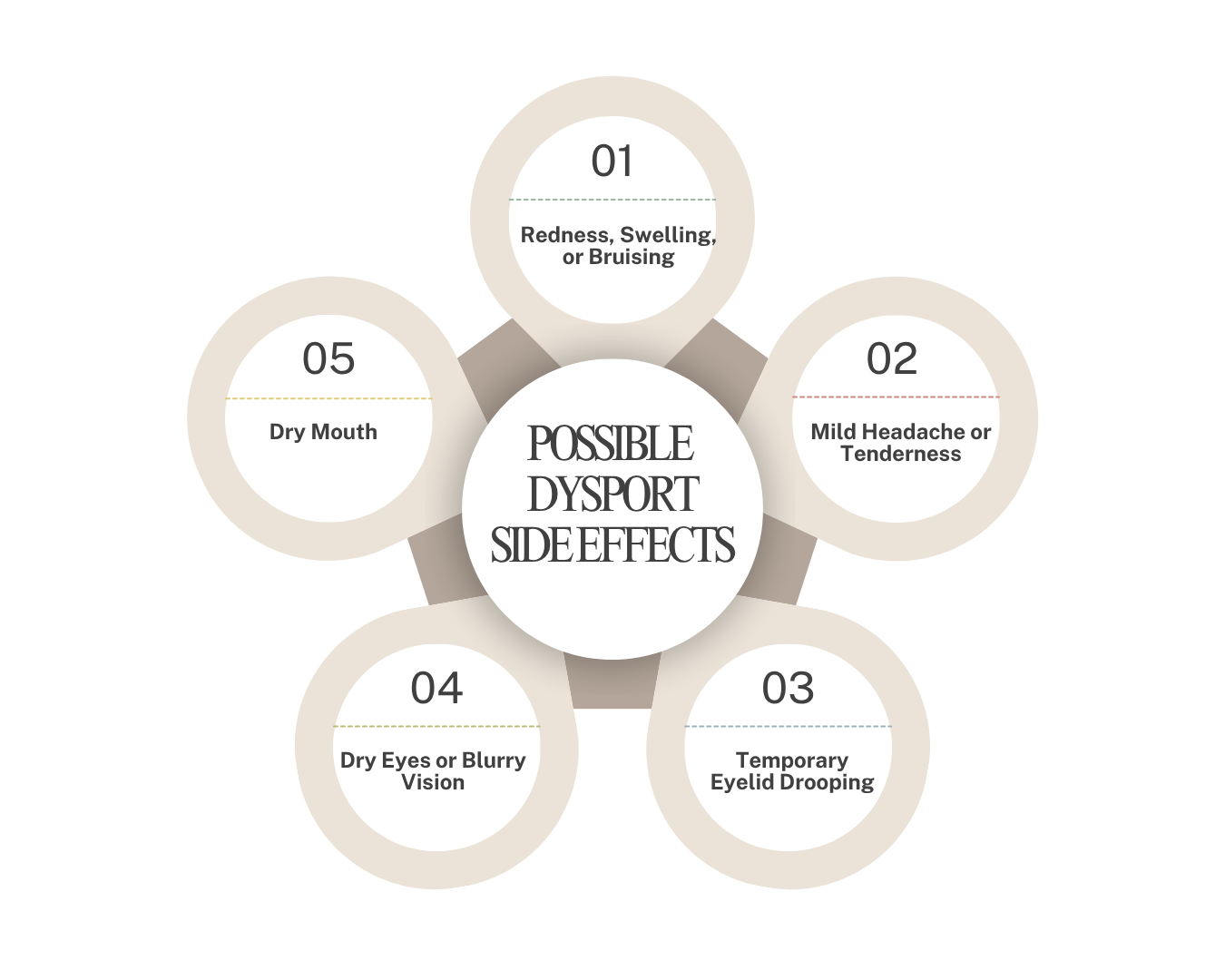
While Dysport injections are generally well-tolerated, some patients may experience mild and temporary side effects as their body adjusts to the treatment. These effects are usually short-lived and resolve on their own within a few days:
Redness, Swelling, or Bruising
Mild Headache or Tenderness
Temporary Eyelid Drooping (Ptosis)
Dry Eyes or Blurred Vision
Dry Mouth or Difficult Swallowing
Allergic Reactions (Very Rare)
1. Redness, Swelling, or Bruising
The most common side effects of Dysport occur at the injection site. You may notice temporary redness, swelling, or minor bruising immediately after your treatment. These reactions are completely normal responses to tiny needle punctures and should fade within a few days.
To minimize bruising, avoid blood-thinning medications or supplements such as aspirin, ibuprofen, fish oil, or vitamin E for about a week before your appointment, unless advised otherwise by your healthcare provider. Applying a cold compress afterward can also help reduce swelling and discomfort.
2. Mild Headache or Tenderness
Some patients report a mild headache or tenderness near the injection area following treatment. This may occur as the muscles relax and adjust to the botulinum toxin effects. Headaches typically resolve within 24 to 48 hours. Staying well-hydrated, resting, and avoiding strenuous exercise for the first day can help relieve discomfort.
If a headache persists beyond a few days or feels severe, contact your healthcare provider to discuss further evaluation.
3. Temporary Eyelid Drooping (Ptosis)
One of the less common side effects of Dysport is temporary eyelid drooping, known as ptosis. This can occur if the product spreads beyond the intended muscle. While this reaction is rare and not life-threatening, it can be bothersome for a few weeks.
Choosing an injector with advanced anatomical knowledge and experience in facial aesthetics significantly reduces the likelihood of ptosis. If it does happen, the effect is temporary and resolves as the botulinum toxin wears off.
4. Dry Eyes or Blurred Vision
A small number of patients may experience dry eyes or blurred vision after Dysport injections, especially when treating areas near the eyes. This can happen if the surrounding muscles that control blinking are slightly affected. These symptoms typically improve on their own as muscle function normalizes.
If you experience prolonged blurred vision, excessive dryness, or eye irritation, it is important to contact your provider to rule out any underlying issues.
5. Dry Mouth or Difficult Swallowing
Dry mouth or mild difficulty swallowing may occur if Dysport spreads to nearby muscles involved in chewing or swallowing. This side effect is most often associated with higher doses used for medical conditions such as cervical dystonia, rather than cosmetic facial treatments.
Still, if you experience ongoing dry mouth, throat discomfort, or trouble swallowing, you should notify your provider. Staying hydrated and avoiding very dry foods can help ease temporary dryness.
6. Allergic Reactions (Very Rare)
Allergic reactions to Dysport are extremely rare but can occur in individuals with specific sensitivities. Symptoms of an allergic reaction may include itching, rash, wheezing, or trouble breathing. In very rare cases, an allergic reaction could be serious and require immediate medical attention.
Patients with known allergies to cow's milk protein should not receive Dysport, as the product may contain trace amounts. Always discuss your full medical history and allergies with your injector before treatment to ensure safety.
How to Minimize Dysport Side Effects
Reducing your risk of side effects starts with preparation, proper technique, and aftercare. Here are several ways to help ensure a smooth and comfortable Dysport experience:
Choose a Qualified, Experienced Injector
Follow Pre-Treatment Guidelines
Follow Post-Treatment Care
Choose a Qualified, Experienced Injector
The most effective way to prevent unwanted side effects is to receive your Dysport injections from a qualified provider. Board-certified nurse practitioners, physician assistants, or medical professionals who specialize in aesthetic medicine understand proper injection depth, placement, and dosing to minimize risks.
An experienced injector will assess your anatomy, muscle strength, and desired outcomes to tailor treatment precisely to your needs. This personalized approach helps ensure natural results while reducing the chance of complications like asymmetry, bruising, or muscle weakness.
Follow Pre-Treatment Guidelines
Proper preparation helps your body respond smoothly to the treatment. Follow any pre-treatment instructions given by your provider, which may include:
Avoiding blood-thinning supplements and medications for several days prior
Avoiding alcohol for 24 hours before your appointment
Staying hydrated and eating a light meal beforehand
Arriving with clean skin free of makeup or lotion
These simple steps can reduce the risk of bruising, swelling, or injection site pain.
Follow Post-Treatment Care
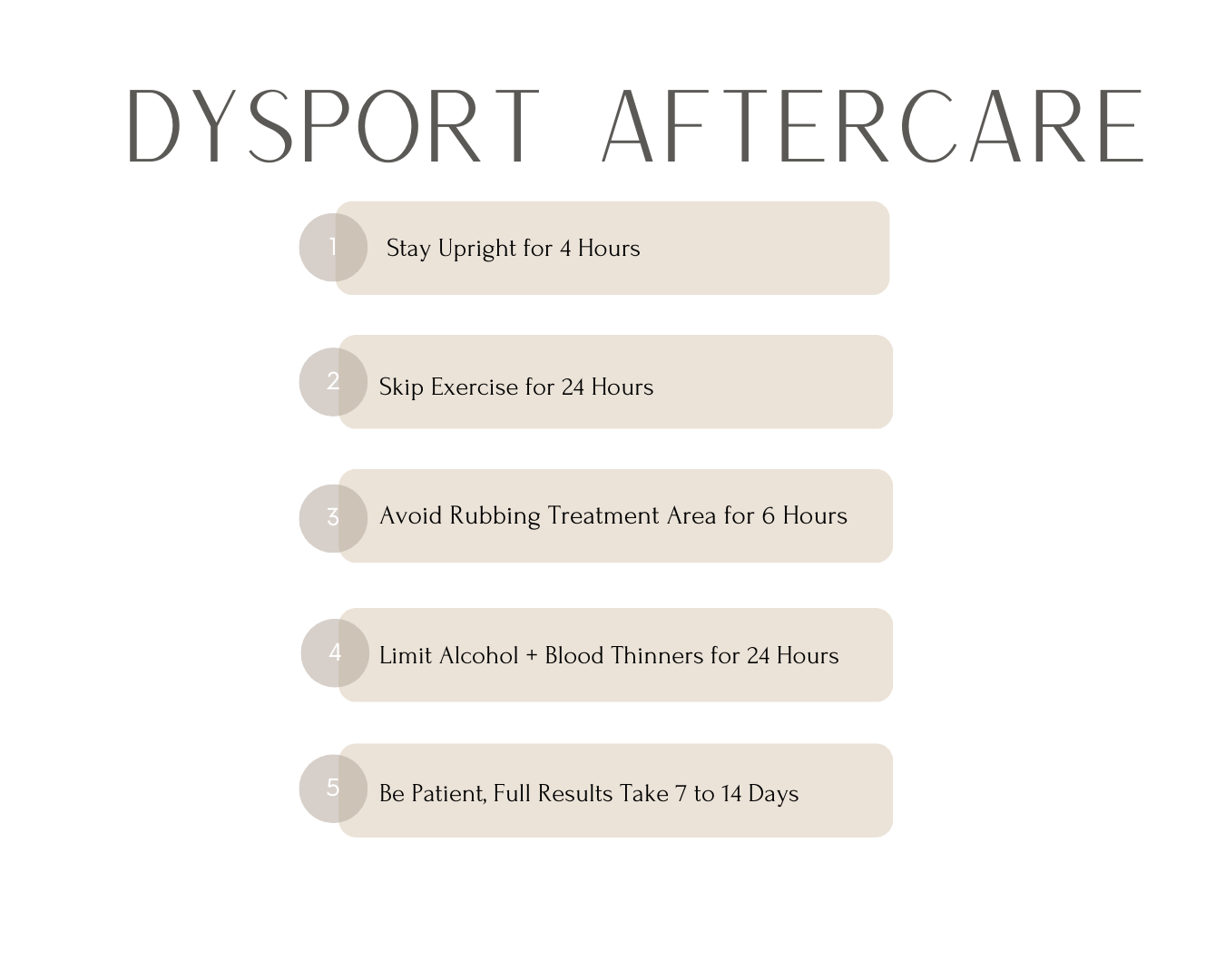
After your Dysport treatment, you can return to most normal activities, but following a few care tips will promote the best healing and results.
Avoid rubbing or massaging the treated area for at least 24 hours
Refrain from lying down for four hours post-treatment
Skip intense workouts or sauna visits for the rest of the day
Apply a cool compress if mild swelling occurs
Avoid facials or skin treatments for several days
Following these instructions helps keep the product in the intended area and reduces the risk of unwanted diffusion or irritation.
How Long Do Side Effects Last?
Most Dysport side effects are mild and temporary. Redness, swelling, or tenderness usually subsides within 24 to 72 hours. Bruising can last up to a week, depending on individual healing. Mild headaches or fatigue may resolve within a day or two.
Less common reactions, such as eyelid drooping or blurred vision, can take several weeks to fully resolve as the botulinum toxin effects gradually wear off. Because Dysport results last about three to four months, any minor side effects will fade well before the next treatment session.
Your healthcare provider can recommend supportive care measures or follow-up visits if needed to ensure everything is healing properly.
When to Contact Your Provider
While serious side effects from Dysport injections are rare, it is always best to stay proactive. Contact your healthcare provider if you experience:
Persistent pain, swelling, or redness at the injection site
Trouble breathing, swallowing, or speaking
Muscle weakness beyond the treated area
Severe allergic reaction symptoms such as rash, itching, or wheezing
Vision changes that do not resolve
In extremely rare cases, botulinum toxin can spread to distant muscles and cause more serious symptoms such as difficulty breathing or muscle stiffness. These effects are most often associated with high-dose medical use, not cosmetic treatments. Nonetheless, it is important to stay aware and communicate promptly with your provider if you have any concerns.
At Thrive Med Spa, every Dysport appointment includes detailed pre- and post-treatment education so you feel confident about what to expect and how to respond if anything unusual arises.
Considering Dysport? Let Thrive Med Spa Help You Out
If you are considering Dysport for facial wrinkles, frown lines, or crow’s feet, the team at Thrive Med Spa is here to guide you safely through every step. We believe the best results come from a blend of medical expertise, artistic precision, and patient education.
Our experienced injectors specialize in natural, balanced outcomes that enhance your features without changing your expression. For those considering Dysport in Cincinnati, we always prioritize client safety, using only genuine products and evidence-based techniques. During your consultation, we will discuss your medical history, review possible side effects, and design a customized plan to achieve your desired results with confidence.
About Thrive Medical Spa
Thrive Med Spa is Cincinnati’s trusted destination for advanced cosmetic treatments and personalized aesthetic care. Founded and led by board-certified nurse practitioner Hannah Simms, our practice offers a range of services, including Dysport injections, dermal fillers, RF microneedling, Sculptra, and Hydrafacial treatments. Every visit is built around transparency, comfort, and excellence.
Frequently Asked Questions (FAQs)
How common are Dysport side effects?
Mild side effects of Dysport, such as redness or slight swelling at the injection site, are relatively common and short-lived. More serious reactions like muscle weakness or trouble breathing are very rare and usually associated with medical conditions treated using higher doses.
What are the most common side effects of Dysport?
The most common effects include mild bruising, tenderness, and redness around the injection site. Some people may also experience a temporary headache or slight eyelid drooping.
How long do Dysport side effects last?
Most mild side effects resolve within a few days. Bruising can last up to a week, while rarer issues such as blurred vision or eyelid drooping may take a few weeks to fade.
Can Dysport cause serious side effects?
Serious side effects are very rare but may include allergic reaction, muscle stiffness, or difficulty swallowing or breathing. These effects are extremely uncommon in cosmetic doses but require immediate medical attention if they occur.
Which is safer: Botox or Dysport?
Both Dysport and Botox contain botulinum toxin type A and have similar safety profiles when administered by a qualified provider. Choosing a skilled injector is the key factor in ensuring safety and satisfaction.
How can I reduce my chances of Dysport side effects?
Select a trained and experienced injector, follow all pre- and post-treatment instructions, and share your full medical history before treatment. Avoiding alcohol and blood thinners before your appointment can also help minimize bruising or swelling.