
Infrared Sauna vs. Traditional Sauna: What’s the Difference and What’s Right for You?
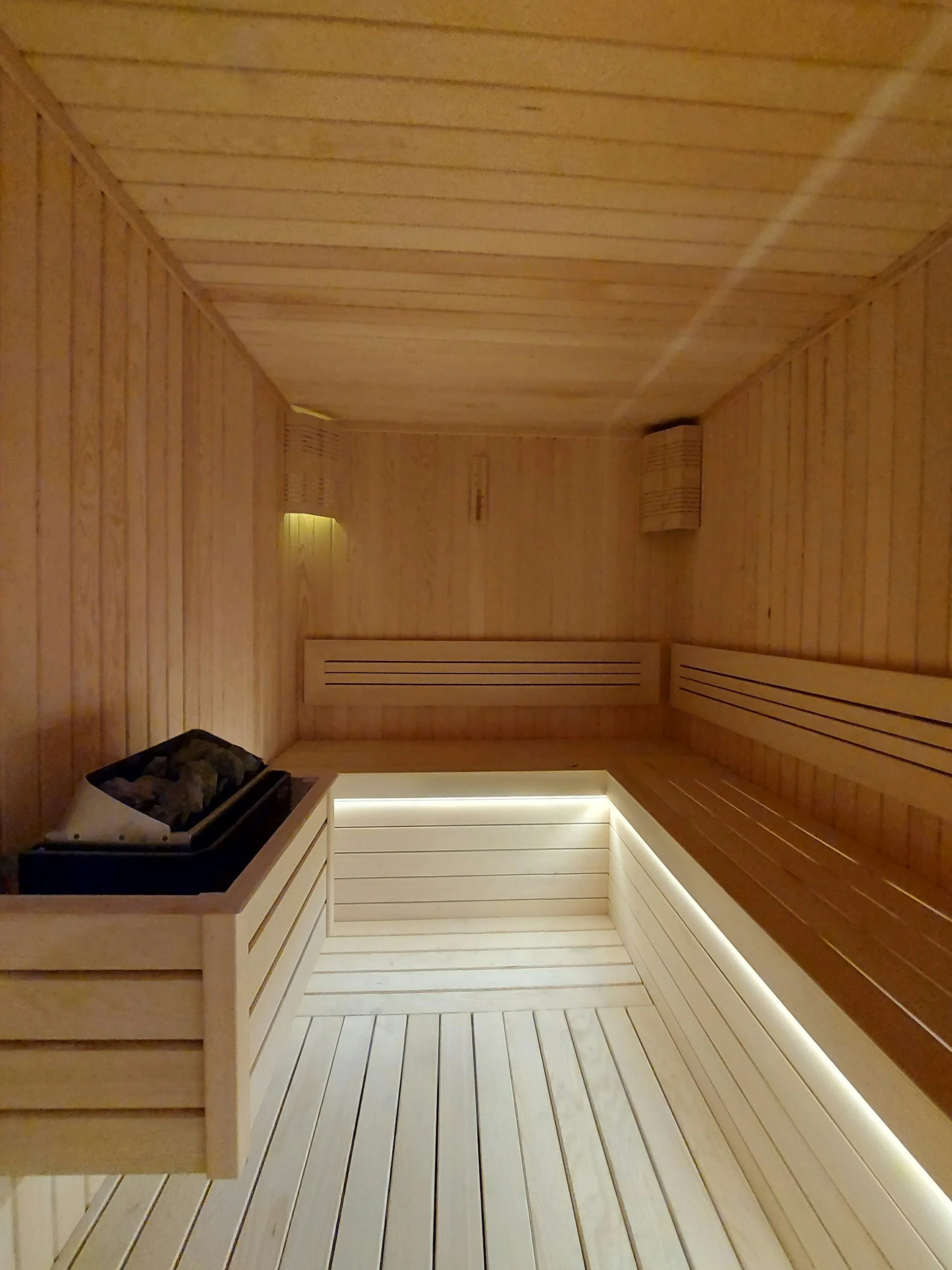
When it comes to heat therapy and wellness recovery, one of the most common questions we hear is: Which is better between an infrared sauna and a traditional sauna? Both options offer impressive health benefits, promote relaxation, and support recovery, but they work very differently.
Understanding the difference between traditional and infrared saunas can help you choose the best option for your goals, comfort level, and overall wellness routine. Whether you are interested in cardiovascular health, stress relief, muscle recovery, or simply a restorative escape, this guide will walk you through everything you need to know.
Key Takeaways
Infrared and traditional saunas both support relaxation, circulation, and recovery. The main difference is how they heat the body (direct tissue heating vs. hot air heating).
Infrared saunas operate at lower temperatures and feel more comfortable, making them easier for beginners and longer sessions, while traditional saunas provide a more intense heat experience.
Neither sauna is “better” universally. The right choice depends on your comfort level, goals (recovery, stress relief, or ritual heat exposure), and how consistently you plan to use it.
The Key Difference Between a Traditional and Infrared Sauna: How Each Sauna Heats the Body
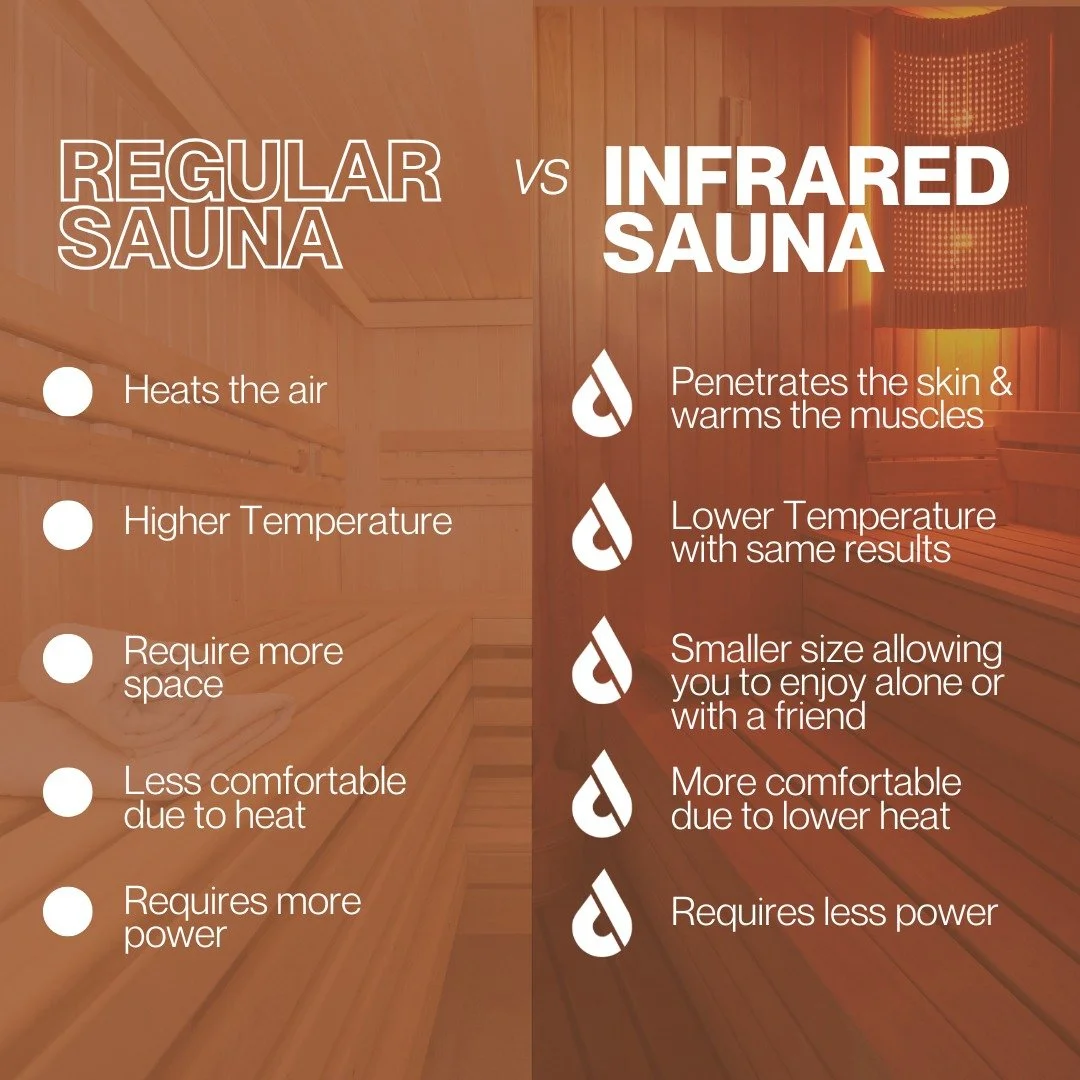
The most important distinction in the sauna debate is how each sauna heats the body. While both rely on heat therapy, the mechanism of heat delivery is completely different.
How a Traditional Sauna Works
A traditional sauna uses a sauna heater to warm the air inside an enclosed space. In many traditional steam saunas, water is poured over hot stones to create steam, increasing humidity and intensifying the experience. The air temperature inside a traditional sauna typically ranges from 170 to 200 degrees Fahrenheit.
In this environment, your body is heated externally. The high air temperature transfers heat to your skin, which then raises your core body temperature. The intense heat stimulates heavy sweating and activates many of the same physiological responses seen in moderate cardiovascular exercise.
Traditional sauna bathing has been practiced for centuries, particularly in Nordic cultures, and remains a powerful tool for relaxation and circulation support.
How an Infrared Sauna Works
Infrared saunas operate differently. Instead of heating the air around you, they use infrared light to directly warm your body. Infrared heat penetrates beneath the surface of the skin, gently increasing core temperature without dramatically raising the surrounding air temperature.
Modern infrared saunas typically operate at 120 to 150 degrees Fahrenheit, making them feel significantly more comfortable than traditional steam saunas. Because infrared saunas provide direct, penetrating warmth, many people experience deep sweating at lower air temperature levels.
Infrared sauna sessions focus on warming the body from the inside out rather than relying on ambient heat.
What Does Each Sauna Feel Like?
The experience of infrared and traditional saunas can feel surprisingly different.
The Experience in a Traditional Sauna
In a traditional sauna, the first thing you notice is the intense heat. The air feels thick, hot, and enveloping. When steam is added, humidity increases, making breathing feel heavier for some individuals.
Sweating begins quickly due to the high temperature. Many people enjoy the ritual of traditional sauna bathing, especially alternating between hot exposure and cold plunges. However, for beginners or those sensitive to heat, the intense heat can feel overwhelming at first.
The Experience in an Infrared Sauna
In contrast, infrared sauna sessions feel gentler and more gradual. The air temperature remains lower, so breathing feels easier. Instead of feeling like you are surrounded by hot air, you experience a steady warmth that builds from within.
Because infrared heat penetrates deeper into tissues, many users report a more sustained sweat and a relaxing, almost meditative experience. For clients seeking stress relief without the discomfort of extreme temperatures, infrared saunas often feel more approachable.
Temperature, Sweat, and Comfort Levels
Understanding how temperature impacts the body can clarify the sauna comparison.
Why Traditional Saunas Feel Hotter
Traditional saunas rely on very high air temperature. The surrounding environment can reach nearly 200 degrees Fahrenheit. The intense heat stimulates rapid sweating and creates a dramatic contrast between your body and the environment.
For some individuals, this intense heat enhances the feeling of detoxification and cardiovascular stimulation. However, the extreme warmth can limit session length for beginners.
Why Infrared Saunas Feel More Tolerable
Infrared saunas operate at lower air temperature levels. Because the infrared light heats the body directly, the room itself does not need to be excessively hot.
Many people find infrared heat more tolerable and are able to stay in the sauna session longer. This extended exposure can contribute to deeper relaxation and sustained sweat production without overwhelming discomfort.
Health and Wellness Benefits
Both traditional and infrared saunas offer compelling health benefits supported by growing research.
Potential Benefits of Traditional Saunas
Traditional steam saunas have been associated with improvements in cardiovascular health. Studies suggest that regular sauna bathing may support circulation, lower blood pressure, and promote vascular flexibility.
Other potential benefits include:
Stress relief through activation of the parasympathetic nervous system
Muscle relaxation and joint comfort
Improved sleep quality
Enhanced circulation
Because traditional sauna therapy mimics mild cardiovascular exertion, it may provide additional support for heart health when used consistently.
Potential Benefits of Infrared Saunas
Infrared saunas provide many of the same benefits, with some additional advantages related to tissue penetration.
Potential benefits include:
Deep muscle recovery
Support for joint mobility
Stress relief and mood enhancement
Increased circulation
Support for skin clarity
Infrared heat may also stimulate collagen production and improve skin tone due to increased blood flow. Many wellness clinics favor modern infrared saunas for their versatility and comfort.
Which Sauna Burns More Calories or Detoxifies Better?
A common question in the sauna debate is whether one burns more calories or detoxifies more effectively.
Both traditional and infrared saunas increase heart rate and metabolic activity during use. While calorie burn does occur during sauna therapy, it should not be considered a primary weight loss strategy.
Regarding detoxification, sweating does help eliminate small amounts of certain toxins through the skin. However, the liver and kidneys remain the primary detoxification organs. Infrared saunas provide deep sweating at lower air temperature levels, but both sauna types stimulate perspiration effectively.
Practical Differences (What Most People Don’t Realize)
Beyond comfort and temperature, there are subtle but important differences between traditional and infrared saunas.
Setup and Environment
Traditional steam saunas require a powerful sauna heater and ventilation to maintain high temperatures. They may also need plumbing to create steam.
Infrared saunas rely on infrared light panels rather than heating the air. They are often more energy efficient and easier to install in modern wellness spaces.
Session Length
Traditional sauna sessions are often shorter due to the intense heat. Many people stay inside for 10 to 20 minutes at a time.
Infrared sauna sessions can comfortably last 20 to 40 minutes. Because infrared heat feels more tolerable, users often remain inside longer.
Accessibility
For beginners, infrared saunas tend to be more accessible. Individuals sensitive to intense heat or humidity often prefer the gentler experience.
However, those who love the ritual and tradition of traditional sauna bathing may prefer the high-heat environment.
Who Should Choose a Traditional Sauna?
You may prefer a traditional sauna if:
You enjoy intense heat
You appreciate traditional steam saunas
You want the ritual of high-temperature sauna bathing
You tolerate humidity well
Traditional sauna therapy can feel invigorating and deeply cleansing for those accustomed to high temperatures.
Who Should Choose an Infrared Sauna?
Infrared saunas may be ideal if:
You are new to sauna therapy
You prefer a lower air temperature
You want longer sessions
You prioritize comfort and relaxation
You are focused on muscle recovery or stress relief
Because infrared saunas provide direct tissue heating without overwhelming ambient heat, they are often preferred for regular wellness routines.
Why Many Wellness Clinics Are Moving Toward Infrared Saunas
Across the country, many wellness centers are investing in modern infrared saunas. The reasons are practical and experiential.
Infrared saunas offer:
Improved comfort
Energy efficiency
Broader accessibility
Strong client retention
Clients often return more consistently when sessions feel tolerable and relaxing rather than overwhelming. The ability to combine infrared sauna sessions with other services such as red light therapy or contrast therapy makes them especially appealing in a modern wellness clinic setting.
Want to Try an Infrared Sauna? Experience It at Thrive Med Spa
At Thrive Med Spa, we believe wellness should feel restorative, intentional, and approachable. Our Greater Cincinnati infrared sauna therapy experience is designed to support stress relief, cardiovascular health, and recovery in a calm, elevated environment.
Whether you are comparing infrared and traditional saunas for the first time or simply looking to upgrade your wellness routine, our team can help you determine what is right for you.
About Thrive Medical Spa
Thrive Med Spa is a medical aesthetic and wellness practice located in Mariemont, Ohio. As a premier Cincinnati med spa, we focus on curated care, evidence-based treatments, and long-term skin and wellness planning. From advanced aesthetic services to heat therapy and recovery modalities, every service is thoughtfully designed to support a timeless, confident you.
Frequently Asked Questions (FAQs)
Is an infrared sauna as effective as a traditional sauna?
Yes, an infrared sauna can be as effective as a traditional sauna, depending on your goals. Both offer health benefits such as improved circulation and stress relief. Infrared saunas provide these effects at a lower air temperature, which many people find more comfortable.
Which sauna is better for beginners?
For beginners, infrared saunas are often better tolerated because the heat feels gentler and less intense. Traditional sauna environments can feel overwhelming at first due to the intense heat and humidity. Starting with infrared sauna sessions allows gradual adaptation to heat therapy.
How often should you use a sauna each week?
Most individuals benefit from sauna therapy two to four times per week. Consistency matters more than duration, whether you choose infrared or traditional sauna sessions. Always listen to your body and stay well hydrated.
Can you lose weight in a sauna?
You may lose temporary water weight during a sauna session due to sweating. However, saunas should not replace exercise or nutrition for long-term weight management. The calorie burn from sauna therapy is modest compared to structured workouts.
Do saunas really detox your body?
Saunas promote sweating, which can help eliminate small amounts of toxins through the skin. However, your liver and kidneys remain the primary detoxification organs. Sauna bathing supports overall wellness but should not be viewed as a standalone detox solution.
Is an infrared sauna better for muscle recovery?
Infrared heat penetrates tissues more deeply, which may support muscle recovery and joint comfort. Many athletes prefer infrared sauna sessions for post-workout relaxation. Traditional sauna therapy also promotes circulation that aids recovery.
Is it normal to sweat more in one type of sauna than the other?
Yes, it is normal to sweat differently depending on the sauna type. Traditional steam saunas may trigger rapid surface sweating due to intense heat. Infrared saunas often produce a slower, deeper sweat response.
How quickly do you feel the benefits of sauna therapy?
Many people feel stress relief and relaxation immediately after a sauna session. Improvements in sleep or muscle recovery may be noticeable within days. Long-term cardiovascular health benefits typically require consistent use over weeks or months.