
Does Red Light Therapy Really Work? What the Research Shows
Red light therapy has become one of the most talked-about wellness and aesthetic treatments in recent years. From improving skin health to helping with hair growth and muscle recovery, many people are curious whether this technology truly delivers measurable results.
With the rise of red light therapy devices, masks, panels, and home-use tools, interest has expanded quickly. But an important question remains: does red light therapy really work, or is it simply a wellness trend?
Scientific research over the last two decades suggests that red light therapy can produce real biological effects in the body. While it is not a cure-all solution, evidence shows that low-level laser therapy and light therapy can support several health and skin benefits when used consistently.
In this guide, the med spa and wellness team at Thrive will explore the science behind red light therapy, what research shows, and what results you can realistically expect.
Key Takeaways
Red light therapy is backed by science, and isn’t just a trend. Research shows it can stimulate cellular activity, improve circulation, and support skin health, recovery, and inflammation reduction.
Results are real but gradual, requiring consistency. Most benefits (like improved skin, reduced pain, or muscle recovery) develop over weeks or months with regular use.
Best used as a supportive treatment, not a cure-all. Red light therapy works by enhancing the body’s natural repair processes and is most effective when combined with a broader wellness or skincare plan.
What Red Light Therapy Is
Red light therapy is a noninvasive treatment that uses specific wavelengths of red light to stimulate cellular activity in the body. These wavelengths are typically delivered through light-emitting diodes (LEDs) or low-power laser technology.
This therapy is sometimes called:
Low-level laser therapy
Low-power laser therapy
LED light therapy
In a red light therapy session, a specialized red light therapy device directs wavelengths of red light toward the skin. These wavelengths penetrate the skin and interact with cells beneath the surface.
The treatment works by stimulating cellular energy production, which may support processes such as:
Cell growth
Tissue repair
Reduced inflammation
Improved circulation
Because of these biological effects, red light therapy has been studied for several medical and cosmetic applications.
What It Is Not
Despite growing popularity, it is important to understand what red light therapy is not.
Red light therapy is not:
A laser surgery procedure
A heat-based treatment
A replacement for medical treatment of serious disease
It is also very different from ultraviolet light exposure. UV light can damage DNA and contribute to skin cancer, while red light wavelengths do not carry the same risks when used properly.
Instead, red light therapy works as a supportive wellness treatment that helps stimulate the body’s natural repair mechanisms.
How Red Light Therapy Works (The Science)
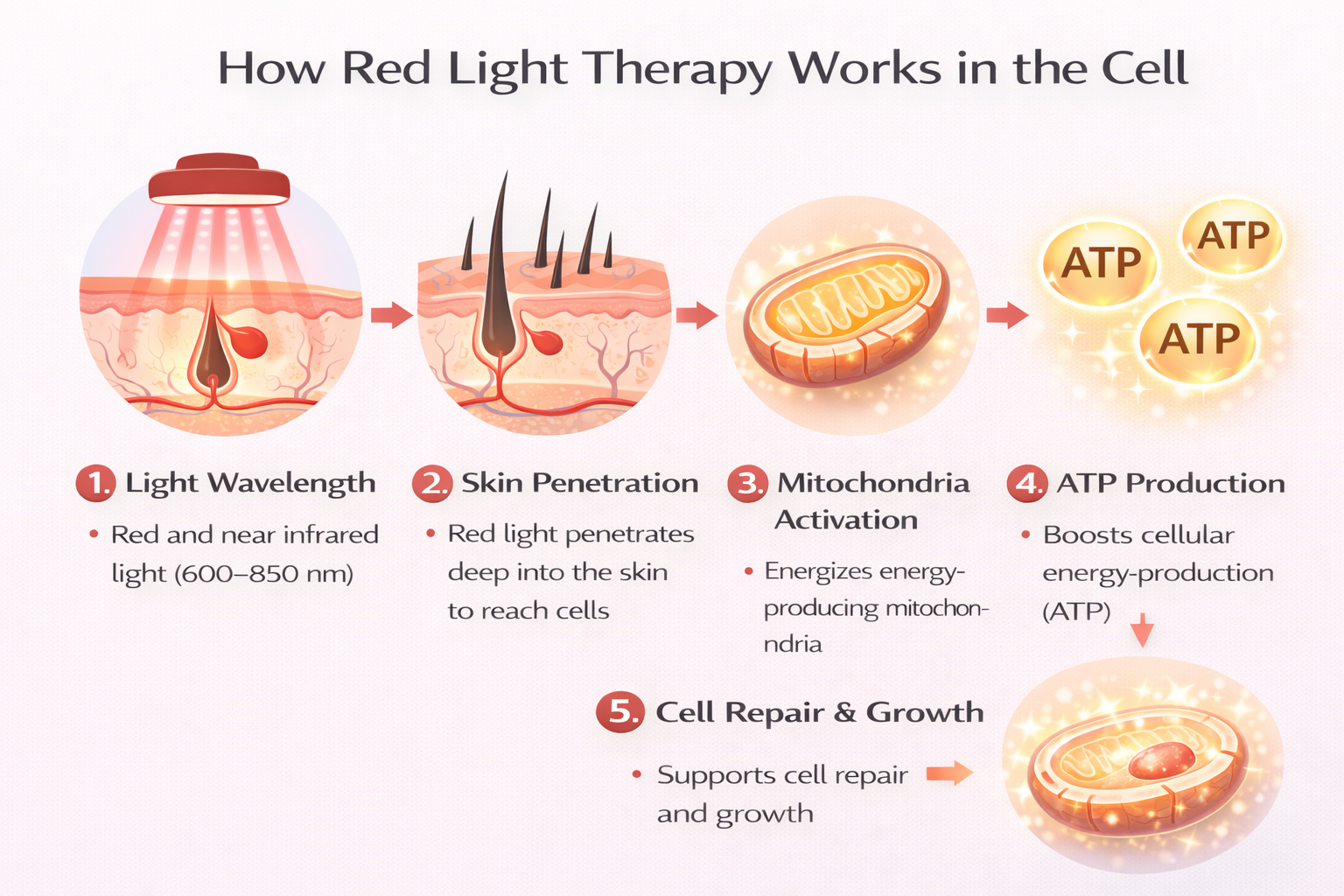
Red light therapy works at the cellular level, primarily within structures known as mitochondria. These structures function as energy generators within cells.
When red light wavelengths reach the skin, they interact with mitochondrial enzymes and increase cellular energy production.
This increase in energy helps cells perform their normal functions more efficiently, which may support tissue repair and regeneration.
Biological Effects
Scientific research suggests red light therapy may produce several biological effects in the body, including:
Increased cell growth and regeneration
Improved circulation and blood flow
Reduced inflammation
Enhanced collagen production
Improved oxygen delivery to tissues
These effects help explain why red light therapy treatments have been studied for a wide variety of health and skin concerns.
Where Research Shows It Helps Most
Research suggests red light therapy may be beneficial for several areas of health and recovery:
Skin health and aging
Acne treatment
Pain and joint support
Muscle recovery
Wound healing
Skin Health and Aging
One of the most widely studied uses of red light therapy is skin rejuvenation.
Red light stimulates fibroblast activity in the skin, which helps produce collagen and elastin. These proteins play a critical role in maintaining skin firmness and elasticity.
Clinical studies suggest red light therapy may help:
Improve skin tone and texture
Reduce fine lines and wrinkles
Support collagen production
Improve overall skin appearance
Because of these effects, red light therapy masks and LED devices have become popular tools in skincare routines.
Acne Treatment
Red light therapy has also shown promise for acne treatment.
Acne often develops when oil production, bacteria, and inflammation combine to irritate the skin. Red light therapy may help reduce inflammation and calm irritated skin.
Studies suggest red light therapy treatments can:
Reduce redness and inflammation
Improve healing of acne lesions
Support healthier skin cells
Although it may not replace traditional dermatologic treatments, red light therapy can complement acne treatment plans.
Pain and Joint Support
Red light therapy has also been studied for chronic pain and joint support.
The therapy appears to improve blood flow to tissues and reduce inflammation, which may help decrease discomfort associated with muscle or joint conditions.
Some individuals report benefits for:
Chronic pain conditions
Joint stiffness
Arthritis-related discomfort
Minor injuries
These improvements are thought to occur through enhanced circulation and tissue repair.
Muscle Recovery
Athletes and active individuals frequently use red light therapy for muscle recovery.
Exercise can create microscopic damage to muscle fibers. Red light therapy may accelerate recovery by increasing circulation and supporting tissue repair.
Potential benefits include:
Reduced muscle soreness
Faster recovery between workouts
Improved flexibility
For individuals with demanding training schedules, consistent red light therapy sessions may help maintain performance and recovery.
Wound Healing
One of the earliest medical uses of low-level laser therapy involved wound healing.
Studies have shown that red light therapy may accelerate tissue repair by stimulating cell growth and improving circulation around injured areas.
These effects can help support faster healing for:
Minor wounds
Skin irritation
Post-procedure recovery
Although more research continues to emerge, early studies suggest light therapy may help enhance the body’s natural healing process.
Why Results Take Time
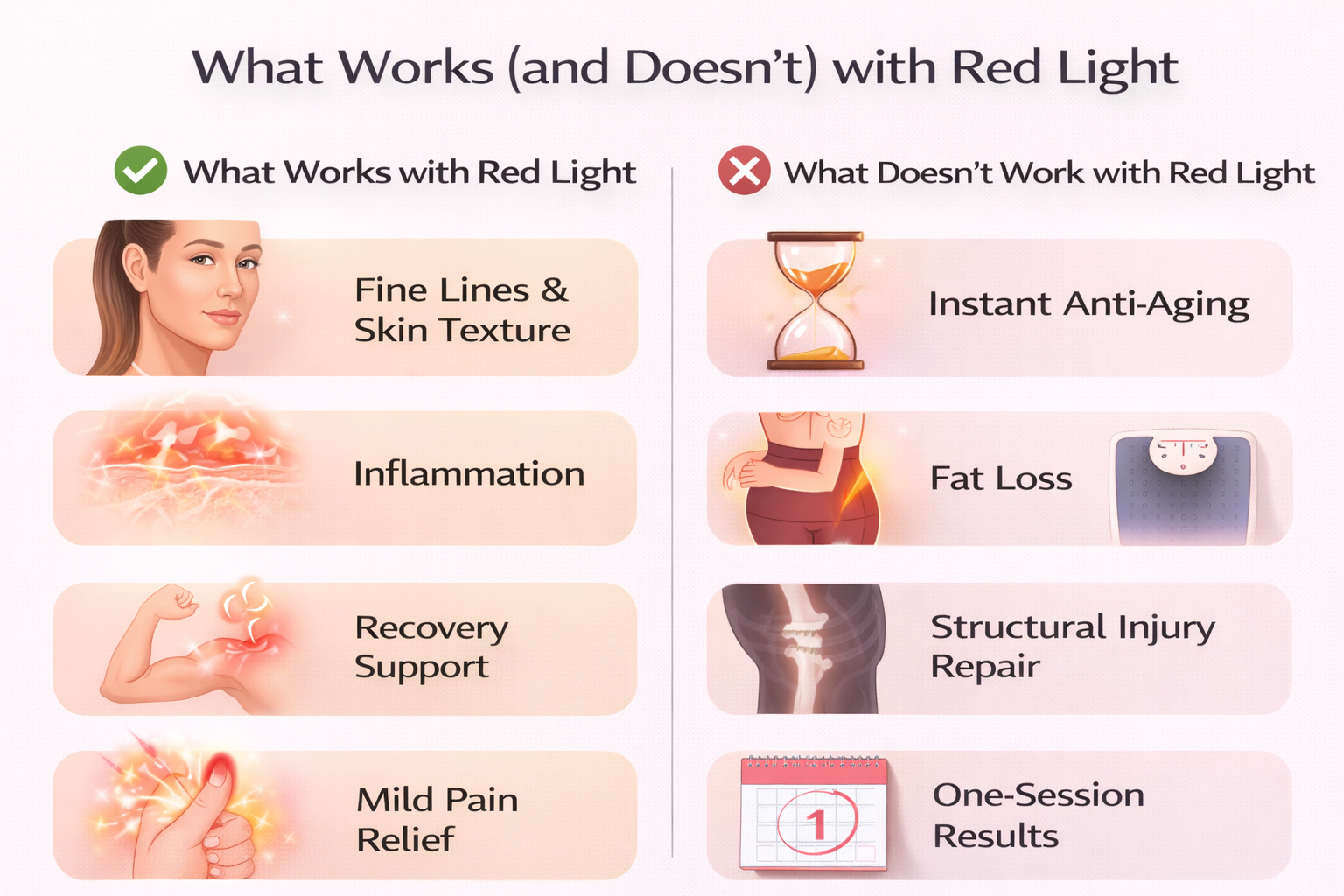
While red light therapy can stimulate biological processes, it does not produce instant changes.
Most benefits develop gradually as cells respond to repeated stimulation.
For example:
Skin improvements may appear after several weeks
Hair growth results may take several months
Muscle recovery benefits may occur after multiple sessions
Consistency is the key factor that determines whether red light therapy works effectively.
Safety and Side Effects
When used correctly, red light therapy is considered safe for most individuals.
Unlike ultraviolet light, red light wavelengths do not damage DNA or increase the risk of skin cancer.
Most red light therapy treatments are painless and require no downtime.
Possible Minor Effects
Although side effects are rare, some individuals may experience mild reactions such as:
Temporary skin redness
Warm sensation during treatment
Mild dryness
These effects are typically short-lived and resolve quickly.
Using professionally designed red light devices and following treatment guidelines helps minimize risks.
Who Is Most Likely to Benefit
Red light therapy tends to work best for individuals seeking improvements in:
Skin health and aging concerns
Acne or skin inflammation
Muscle recovery
Chronic pain management
Hair growth stimulation
Because the treatment works by stimulating natural biological processes, individuals with active cell function typically respond best.
For example, individuals experiencing hair thinning may benefit when therapy helps stimulate hair follicles and support hair growth.
Who May Not See Significant Results
While red light therapy has promising benefits, it may not produce dramatic results for everyone.
Individuals may see limited improvement if:
Hair follicles are permanently damaged
Skin concerns require medical intervention
Treatments are used inconsistently
Like many wellness treatments, red light therapy works best as part of a broader care plan.
Professional Treatment vs At-Home Devices
Today, many people explore red light therapy through at-home devices such as masks or panels.
While these tools can be useful, professional treatments often provide stronger and more consistent results.
Professional red light therapy devices typically offer:
Higher quality light-emitting diodes
More precise wavelengths
Larger treatment coverage
Controlled treatment protocols
In addition, trained providers can recommend treatment frequency and combination therapies.
While at-home devices may be convenient, professional red light therapy treatments often produce faster and more noticeable improvements.
What a Treatment Plan Typically Looks Like
A typical red light therapy plan includes multiple sessions over several weeks.
Most providers recommend:
2–3 sessions per week initially
Sessions lasting 10–20 minutes
A treatment period of 6–12 weeks
After the initial phase, many individuals transition to maintenance sessions.
Because red light therapy is noninvasive, it can easily be incorporated into wellness routines alongside other treatments.
Curious How Red Light Therapy Works? Discover for Yourself at Thrive Med Spa
If you are interested in experiencing the benefits of red light therapy firsthand, Thrive Med Spa offers professional red light therapy sessions in Cincinnati designed to support skin health, recovery, and overall wellness.
Our goal is to help clients explore treatments that support confidence, relaxation, and long-term well-being.
About Thrive Medical Spa
Thrive Medical Spa is located in Mariemont, Ohio, and proudly serves clients throughout Cincinnati and surrounding communities. Thrive blends advanced aesthetic treatments with wellness therapies designed to support both beauty and health.
From skin rejuvenation to infrared sauna and red light therapy sessions, Thrive focuses on helping clients cultivate their beauty and let confidence thrive.
Frequently Asked Questions (FAQs)
Does red light therapy really work?
Yes, research suggests red light therapy can stimulate cellular activity, improve circulation, and reduce inflammation. These effects may support skin health, hair growth, and muscle recovery.
Is red light therapy scientifically proven?
Several clinical studies support the effectiveness of low-level laser therapy for skin rejuvenation, pain management, and wound healing. While more research continues, current evidence suggests red light therapy can provide measurable benefits.
Is red light therapy legitimate or just a trend?
Red light therapy is considered a legitimate treatment used in dermatology, sports medicine, and rehabilitation. Although it has become trendy in skincare, the underlying technology has been studied for decades.
How long does it take for red light therapy to work?
Results vary depending on the condition being treated. Some individuals notice improvements in skin or recovery within a few weeks, while hair growth may take several months.
Is professional red light therapy better than at-home devices?
Professional red light therapy devices typically deliver stronger, more consistent wavelengths than many at-home devices. As a result, professional treatments often produce faster and more noticeable results.
How often should you use red light therapy?
Many providers recommend red light therapy sessions two to three times per week initially. Consistency is important for achieving optimal results.
Can you combine red light therapy with other treatments?
Yes, red light therapy can often be combined with other treatments such as skincare therapies, wellness treatments, or recovery programs.
Is red light therapy painful?
No, red light therapy is not painful. Most individuals experience only a gentle warmth during treatment, making it a comfortable and relaxing therapy option.